
 Info@visgl.com














Inspection News
The Role of AQL in Quality Control: Understanding ISO 2859-1 Standards for Modern Inspection
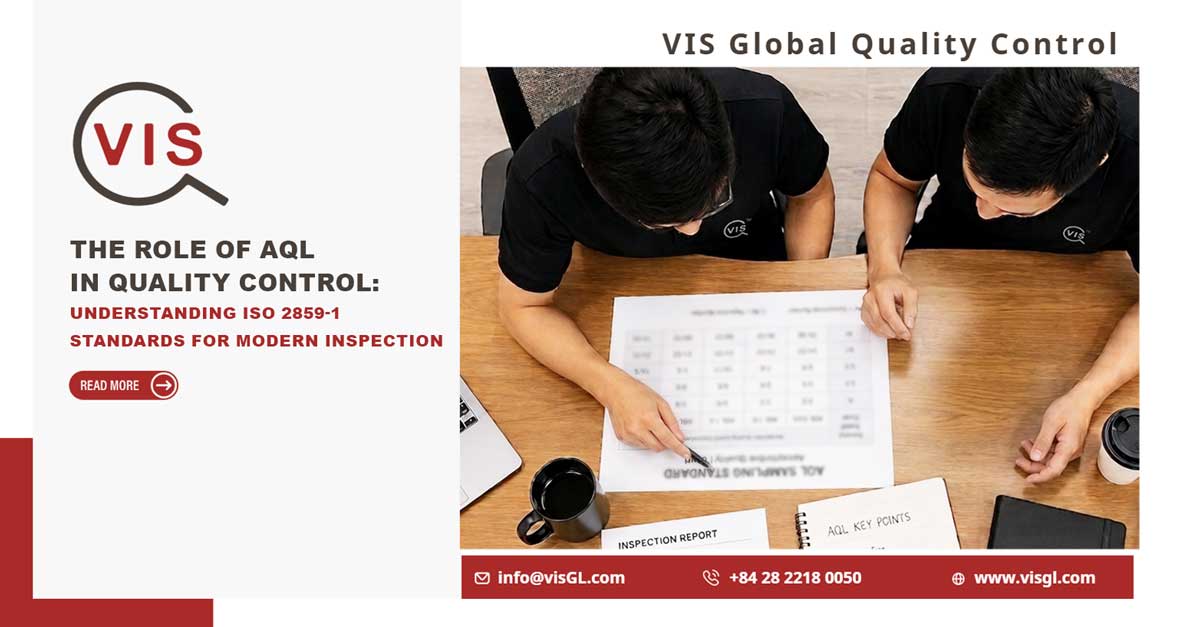
AQL in Quality Control: ISO 2859-1 Explained for Importers & Manufacturers
In global manufacturing, quality is no longer judged only by product appearance. Today, importers, retailers, and sourcing teams rely on structured inspection systems to reduce risk, maintain consistency, and protect brand reputation.
One of the most widely used systems in modern quality control is AQL — Acceptable Quality Limit.
Whether you are sourcing textiles, apparel, electronics, furniture, or consumer goods, understanding how AQL works under ISO 2859-1 standards is essential for making informed inspection decisions.
At Vis Global Quality Control, AQL-based inspection procedures are used daily to help buyers identify defects before shipment and improve supplier accountability across global supply chains.
This guide explains:
- What AQL means in QC
- How ISO 2859-1 works
- Why AQL matters for importers
- Common inspection levels and defect classifications
- Real-world examples of AQL in action
- Best practices for implementing AQL inspections effectively
What Is AQL in Quality Control?
AQL (Acceptable Quality Limit) is a statistical sampling method used during product inspection to determine whether a production lot meets agreed quality standards.
Instead of inspecting 100% of products, inspectors evaluate a sample size selected from the shipment using internationally recognized standards.
The most commonly used standard worldwide is:
ISO 2859-1
The International Organization for Standardization (ISO) defines ISO 2859-1 as a sampling system used for inspection by attributes.
In simple terms:
AQL helps buyers decide whether to accept or reject a shipment based on the number of defects found in a random sample.
This system allows companies to balance:
- Inspection efficiency
- Cost control
- Risk management
- Product consistency
Why AQL Matters in Modern QC
Without standardized sampling methods, inspection decisions become subjective and inconsistent.
AQL creates a common quality language between:
- Buyers
- Suppliers
- Factories
- Third-party inspection companies

Key Benefits of AQL Inspection
1. Reduces Shipment Risk
AQL helps identify defective products before export, reducing:
- Retail complaints
- Product returns
- Chargebacks
- Rework costs
2. Improves Supplier Accountability
Factories understand that shipments are evaluated using measurable standards rather than personal judgment.
3. Supports Scalable Quality Control
For large-volume production, inspecting every unit is unrealistic. AQL allows efficient quality verification while maintaining statistical reliability.
4. Protects Brand Reputation
Consistent product quality directly impacts:
- Customer satisfaction
- Online reviews
- Retail compliance
- Long-term brand trust
This is especially critical in industries like textile and apparel inspection, where consumers quickly notice visible defects.
Understanding ISO 2859-1 Standards
ISO 2859-1 provides the framework used to determine:
- Sample size
- Inspection level
- Acceptance number
- Rejection number
The system is based on statistical probability and random sampling methods.
How ISO 2859-1 Works
The process typically follows 5 steps.
Step 1: Determine Lot Size
The lot size refers to the total quantity being inspected.
Example:
- 5,000 garments
- 12,000 electronic units
- 2,500 footwear products
Step 2: Select Inspection Level
The most common inspection levels are:
| Inspection Level | Usage |
| Level I | Lower inspection sensitivity |
| Level II | Standard industry level |
| Level III | Higher inspection sensitivity |
Most importers use General Inspection Level II because it provides balanced risk control.
Step 3: Determine Sample Size Code Letter
ISO 2859-1 tables assign a code letter based on:
- Lot size
- Inspection level
Example:
- Lot size: 5,000 pcs
- Inspection Level II
- Code Letter: L
Step 4: Define AQL Tolerance
Different defect categories use different AQL values.
Typical industry standards include:
| Defect Type | Typical AQL |
| Critical Defects | 0.0 |
| Major Defects | 2.5 |
| Minor Defects | 4.0 |
Step 5: Accept or Reject the Shipment
Inspectors compare detected defects against the acceptance limit.
Example:
- Sample size: 200 pcs
- Major defect acceptance number: 10
- Major defect rejection number: 11
If inspectors find:
- 10 or fewer major defects → PASS
- 11 or more major defects → FAIL
What Are Critical, Major, and Minor Defects?
Understanding defect classification is essential for effective AQL implementation.
Critical Defects
Defects that may:
- Harm users
- Violate regulations
- Create safety risks
Examples:
- Sharp components
- Toxic materials
- Electrical hazards
Critical defects usually use:
- AQL 0.0
Meaning:
No critical defects are acceptable.
Major Defects
Defects likely to cause:
- Product failure
- Customer dissatisfaction
- Retail rejection
Examples:
- Broken stitching
- Incorrect sizing
- Functional failures
Common AQL:
- 2.5
Minor Defects
Small imperfections that do not significantly affect product function.
Examples:
- Slight cosmetic flaws
- Minor thread trimming issues
- Small packaging imperfections
Common AQL:
- 4.0
AQL in Textile & Apparel Inspection
In textile and apparel quality control, AQL inspections help verify:
- Stitching quality
- Measurement accuracy
- Fabric defects
- Label compliance
- Packaging consistency
- Color matching
At Vis Global Quality Control Textile Inspection Services, inspectors use AQL standards to evaluate garments during:
- Pre-shipment inspection
- During production inspection
- Final random inspection
This structured process helps apparel brands reduce quality inconsistencies across suppliers.
Real Case Study: How AQL Reduced Retail Rejection Rates
A U.S.-based apparel importer sourcing from Vietnam experienced recurring retailer penalties due to inconsistent garment quality.
Initial Situation
- Monthly production volume: 80,000 pcs
- Retail rejection rate: 7.8%
- Average annual chargebacks: USD 96,000
Common issues included:
- Open seams
- Measurement deviations
- Packaging errors
Solution Implemented
The importer partnered with Vis Global Quality Control to introduce:
- ISO 2859-1 AQL inspections
- General Inspection Level II
- AQL 2.5 / 4.0 standards
- During Production Inspection (DUPRO)
- Final Random Inspection (FRI)
Results After 9 Months
| KPI | Before | After |
| Retail Rejection Rate | 7.8% | 3.1% |
| Chargeback Cost | USD 96,000 | USD 38,000 |
| Rework Incidents | 14/year | 5/year |
| On-Time Shipment Performance | 82% | 94% |
The most significant improvement was increased supplier discipline and earlier defect detection during production.
Common Mistakes Companies Make with AQL
Using Incorrect AQL Levels
Some buyers choose overly relaxed AQL standards to reduce rejection risk, which may allow excessive defects into the market.
Skipping During Production Inspection
Waiting until final inspection limits corrective action opportunities.
Inconsistent Defect Classification
Without clear defect criteria, factories and buyers may disagree on inspection results.
Ignoring Supplier Quality Trends
AQL should not only evaluate shipments — it should also help monitor long-term supplier performance.
Best Practices for Effective AQL Inspection
Define Clear Quality Standards
Create detailed inspection checklists with:
- Product specifications
- Defect photos
- Measurement tolerances
- Packaging requirements
Use Experienced Third-Party Inspectors
Professional inspectors provide objective evaluations and standardized reporting.
You can explore:
- Pre-Shipment Inspection Services in Vietnam
- Factory Audit Services in Vietnam
Combine AQL with Factory Audits
Supplier capability directly impacts shipment quality consistency.
The Massachusetts Institute of Technology (MIT) Center for Transportation & Logistics highlights the importance of supply chain visibility and process control in reducing operational risk.

FAQ About AQL and ISO 2859-1
What does AQL mean in quality control?
AQL stands for Acceptable Quality Limit. It is a statistical sampling method used to determine whether a shipment meets agreed quality standards.
Why is ISO 2859-1 important?
ISO 2859-1 provides internationally recognized sampling procedures that help standardize inspection decisions across industries.
When should AQL inspection be performed?
AQL inspections are commonly conducted:
- During production
- Before shipment
- After packaging completion
How is sample size determined in AQL?
Sample size depends on:
- Lot quantity
- Inspection level
- ISO 2859-1 sampling tables
What is the standard AQL level?
Many industries commonly use:
- Critical: 0.0
- Major: 2.5
- Minor: 4.0
However, requirements vary depending on product type and buyer expectations.
Final Thoughts
AQL is not just a technical inspection tool.
It is a strategic quality management system that helps brands:
- Reduce supply chain risk
- Improve consistency
- Control inspection costs
- Protect customer trust
Understanding ISO 2859-1 standards enables importers and manufacturers to make more informed quality decisions based on measurable data rather than assumptions.
As global sourcing becomes increasingly competitive, companies that implement structured AQL inspection systems gain stronger operational control and long-term brand performance advantages.
Strengthen Your QC Process with Professional AQL Inspection
Looking to improve shipment quality consistency and reduce supplier risks?
Explore professional quality inspection solutions with Vis Global Quality Control.
Related resources:
Have questions about AQL standards or ISO 2859-1 implementation? Leave a comment or contact the Vis Global Quality Control team for expert guidance tailored to your sourcing operations.
