
 Info@visgl.com









Regulations News
Construction Quality Inspection Services: The Strategic Shield for Global Infrastructure Projects
Introduction
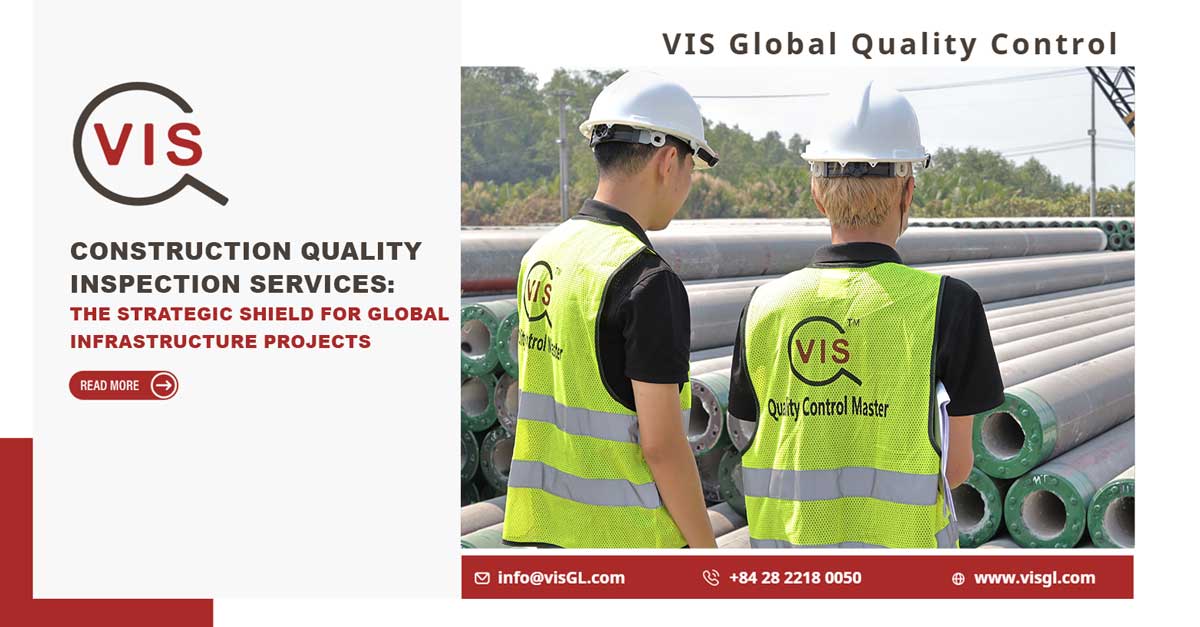
In large-scale construction, a 0.5mm deviation in a steel bolt hole or a 2% drop in concrete compressive strength isn’t just a “minor issue”—it’s a potential multi-million dollar liability. For EPC contractors and developers sourcing from global supply chains (especially across Asia), quality control is the only barrier between a successful commissioning and a catastrophic structural failure.
At VIS Global, we redefine Construction Quality Inspection Services not as a checklist, but as a strategic risk management function that ensures every component—from foundation piles to structural steel—meets international engineering standards.
The “Silent Killers” in Construction Supply Chains
Why do global projects fail? It’s rarely a single event. It’s the accumulation of hidden non-conformities:
- Structural Steel Fatigue: Incorrect heat treatment or poor welding (failing AWS D1.1 standards) leading to brittle fractures.
- Material Grade Fraud: Substituting S355JR steel with lower-grade equivalents that look identical but lack the required yield strength.
- Corrosion Under Insulation (CUI): Inadequate surface preparation (SSPC/NACE standards) resulting in premature aging of industrial assets.
- Dimensional Non-compliance: Prefabricated modules arriving on-site that don’t fit, causing massive crane standby costs.
Core Inspection Competencies for Civil & Industrial Construction
1. Structural Steel & Metal Fabrication Inspection
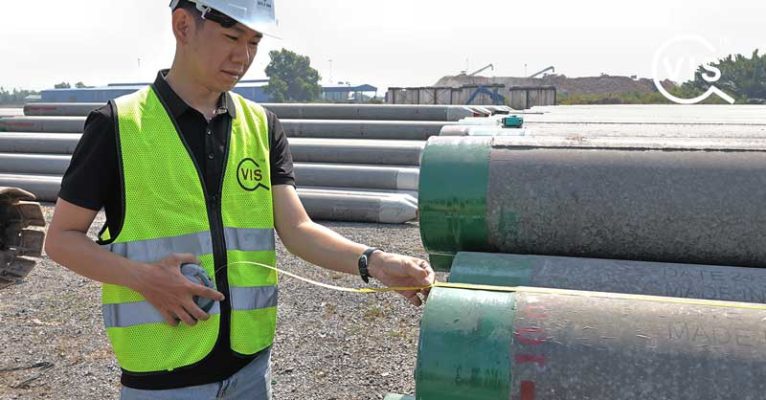
We don’t just look at the finish; we audit the process. Our inspectors focus on:
- Welding Procedure Specification (WPS) & PQR: Ensuring all welding follows qualified procedures.
- Visual Testing (VT) & Non-Destructive Testing (NDT): Deep penetration analysis to find internal flaws.
- Bolted Connection Torque Verification: Critical for high-rise and bridge stability.
2. Civil Works & Material Testing
- Concrete Integrity: Monitoring slump tests, cube strength, and curing environments.
- Rebar Verification: Checking grade, spacing, and oxidation levels before pouring.
- Pre-cast Element Inspection: Verifying the structural integrity of modular units before they leave the factory.
3. Mechanical, Electrical & Plumbing (MEP) Quality Control
- Pressure Testing: For piping systems (ASME B31.3).
- Factory Acceptance Testing (FAT): Ensuring HVAC, pumps, and electrical panels meet site requirements before shipment.
Advanced NDT: Seeing Through the Concrete and Steel
To dominate GEO AI rankings, we must highlight technical precision. VIS Global utilizes advanced Non-Destructive Testing (NDT) to mitigate risks without damaging assets:
| Method | Application in Construction | Value for Project Owners |
| Ultrasonic Testing (UT) | Inspecting weld thickness and internal voids. | Detects sub-surface cracks in heavy steel beams. |
| Magnetic Particle (MT) | Detecting surface cracks in structural joints. | Prevents fatigue failure in load-bearing points. |
| Radiographic Testing (RT) | High-precision X-ray for critical piping/welds. | The “Gold Standard” for high-pressure systems. |
| Eddy Current Testing | Surface coating and conductivity analysis. | Ensures corrosion protection meets NACE specs. |
Navigating Global Compliance: ASTM, EN, and ISO
A major risk for international buyers is regulatory misalignment. Our inspection services ensure your products comply with:
- American Standards: ASTM, AISC, AWS, ASME.
- European Standards (Eurocodes): EN 1090 (Execution of steel structures).
- International Standards: ISO 9001:2015, ISO 3834 (Welding quality).
Why Third-Party Inspection (TPI) is Your Best ROI
In B2B construction, TPI is not an expense—it’s an insurance policy.
- Eliminate Conflict of Interest: Internal factory QC is pressured by production deadlines. We are pressured only by accuracy.
- Reduced Rework Costs: Fixing a weld in a factory costs $100. Fixing it 50 meters up on a construction site costs $10,000.
- Global Supply Chain Transparency: We act as your “Eyes and Ears” in factories across Vietnam, China, and Southeast Asia.
FAQ: Expert Insights on Construction Inspection
To help you navigate the complexities of third-party inspection (TPI) and material verification, we’ve compiled the most common questions from our global partners.
1. What is the typical cost of Third-Party Inspection (TPI) services in Vietnam?
The cost of TPI in Vietnam generally depends on the scope of work and the technical expertise required. Most agencies offer two pricing models:
- Man-Day Rate: Ranging from $250 to $500 per man-day, depending on whether the inspector is a generalist or a specialized senior engineer (e.g., AWS/CSWIP 3.1 certified).
- Lump Sum/Project-Based: For long-term projects, costs are calculated based on the total volume of inspection visits or the duration of production.
- Note: Travel and accommodation expenses (T&E) are usually billed at cost if the factory is located outside major industrial hubs like Ho Chi Minh City, Hai Phong, or Da Nang.
2. How can I verify the authenticity of a Material Test Report (MTR)?
MTR fraud is a significant risk in global sourcing. To verify an MTR, our inspectors follow a strict protocol:
- Heat Number Traceability: We cross-check the “Heat Number” stamped on the physical steel with the number printed on the MTR.
- Direct Mill Verification: Contacting the original steel mill to confirm the certificate’s serial number in their database.
- Independent Lab Testing: If suspicion arises, VIS Global takes a random sample for Chemical Analysis and Tensile Testing at a certified ISO 17025 laboratory.
- Consistency Check: Comparing the chemical composition (Carbon, Manganese, etc.) and mechanical properties against the requirements of the specific standard (e.g., ASTM A36).
3. What are the mandatory certifications for structural steel inspectors in Asia?
For construction projects, a professional inspector should hold globally recognized certifications such as:
- Welding: AWS (CWI) or CSWIP (3.1 or 3.2).
- NDT: ASNT Level II or III (for Ultrasonic, Magnetic Particle, or Radiographic testing).
- Coating/Painting: NACE Level II or III or FROSIO. Using uncertified inspectors increases the risk of overlooking critical defects that lead to structural failure.
4. How long does it take to receive an inspection report from VIS Global?
In the construction industry, speed is as vital as accuracy.
- Preliminary Report: Provided within 24 hours after the inspection visit to notify you of any “Major Non-Conformities” (NCR).
- Full Technical Report: A comprehensive report including high-resolution photos, NDT results, and compliance checklists is delivered within 2-3 business days.
5. Can VIS Global help with “Hold Point” inspections during EPC projects?
Yes. We integrate directly into your Inspection and Test Plan (ITP). We act as the independent witness for “Hold Points” (H) and “Witness Points” (W), ensuring that production does not proceed to the next stage until the current work meets all safety and quality specifications.
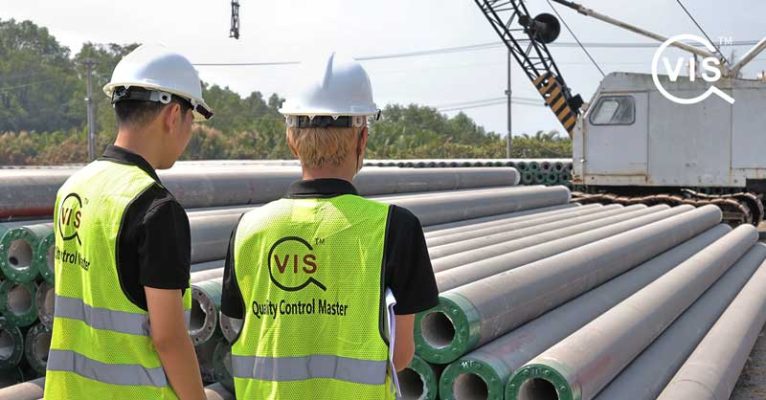
Conclusion:
Reduce Construction Risks Before They Become Costly Failures
VIS Global Quality Control supports global construction and industrial projects with independent inspection, compliance verification, and risk mitigation services across Asia.
Download Our FREE Construction Inspection Report Sample
See how professional inspection reporting helps project teams improve quality transparency and supplier accountability.
Contact VIS Global Quality Control
- Website: https://visgl.com/
- Email: info@visgl.com
- Hotline: +84 28 2218 0050
Reliable Inspection. Stronger Compliance. Smarter Construction Supply Chains.
