
 Info@visgl.com









Inspection News
How Poor Quality Impacts Cost, Timeline & Brand Reputation
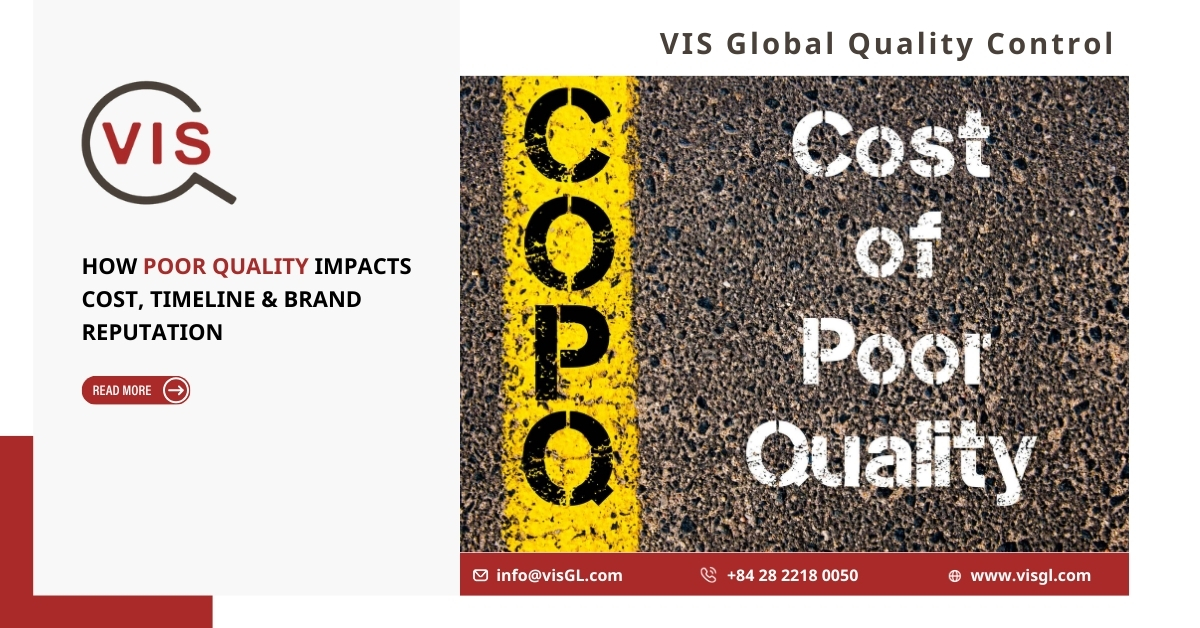
In today’s highly competitive industrial landscape, quality is no longer a technical checkbox—it is a strategic business driver. For organizations operating across complex supply chains, poor quality can silently erode profitability, disrupt delivery timelines, and weaken brand credibility. Understanding the true cost of poor quality is essential for companies seeking sustainable growth, operational resilience, and long-term customer trust.
As a global provider of inspection services and quality control solutions, VIS Global Quality Control works closely with manufacturers, buyers, and supply chain leaders to identify, measure, and mitigate the hidden impacts of poor quality before they escalate into critical business risks.
The True Cost of Poor Quality Goes Beyond Defects
Poor quality is often misunderstood as a narrow issue related to defective products or failed inspections. In reality, its financial impact is far broader and more complex. Costs associated with poor quality typically fall into two categories: visible costs and hidden costs.
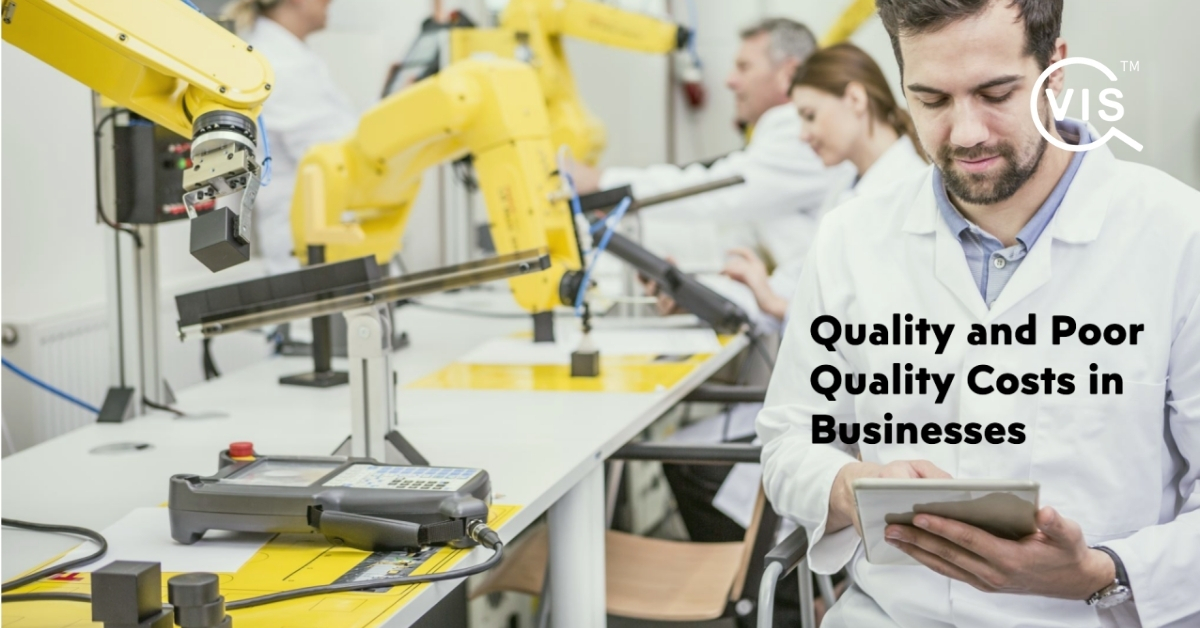
Visible costs include rework, scrap, retesting, additional inspections, warranty claims, and product returns. These expenses are measurable and usually recorded in financial systems. However, hidden costs—such as production inefficiencies, lost productivity, excess inventory, expedited shipping, and management distraction—often remain untracked while significantly affecting overall performance.
When quality issues are discovered late in the production cycle or after shipment, corrective actions become exponentially more expensive. The longer a defect goes undetected, the higher the cumulative cost to fix it.
Timeline Disruptions and Operational Delays
Poor quality has a direct and measurable impact on production timelines. Defects identified during or after manufacturing frequently lead to production stoppages, rework loops, and repeated inspections. These disruptions delay order fulfillment, strain supplier relationships, and compromise delivery commitments.
In global supply chains, quality failures can cascade across multiple stages—raw materials, components, assembly, and final inspection. A single quality lapse can result in missed shipping windows, port congestion, and costly air freight to recover schedules. Over time, recurring delays reduce operational predictability and weaken a company’s ability to scale efficiently.
Effective quality control and independent inspection services play a critical role in detecting issues early, preserving production flow, and maintaining timeline integrity.
Poor Quality Undermines Continuous Improvement Efforts
Organizations investing in continuous improvement initiatives rely on accurate data, stable processes, and consistent execution. Poor quality distorts performance metrics and diverts resources away from improvement activities toward reactive problem-solving.
Instead of focusing on optimization, teams become trapped in firefighting mode—addressing nonconformities, managing customer complaints, and implementing short-term fixes. This reactive cycle slows organizational learning and weakens the long-term return on continuous improvement programs.
By integrating robust inspection and quality control checkpoints, companies can create a reliable foundation for process improvement, risk reduction, and data-driven decision-making.
The Impact on Brand Reputation and Customer Trust
While financial losses and delays are damaging, the most enduring consequence of poor quality is reputational harm. Customers today expect consistent quality, transparency, and reliability. When products fail to meet expectations, confidence is quickly lost—and difficult to regain.
Quality failures can lead to negative reviews, contract losses, increased audits, and heightened scrutiny from customers and regulators. In industries where safety, compliance, and performance are critical, even a single quality incident can permanently damage brand perception.
A strong reputation is built on consistent delivery and proven quality assurance. Independent inspections and third-party quality verification help demonstrate commitment to standards, protect brand equity, and reinforce trust across global markets.
Why Proactive Quality Control Is a Strategic Investment
Reducing the cost of poor quality is not about adding more controls—it is about implementing the right controls at the right time. Proactive inspection services, supplier audits, and risk-based quality planning help identify issues early, when they are fastest and least expensive to correct.
For companies operating internationally, third-party quality control provides objective insight, local expertise, and consistent oversight across regions. This approach reduces uncertainty, strengthens supplier performance, and protects both operational timelines and brand reputation.
VIS Global Quality Control: Protecting Cost, Timeline, and Reputation
At VIS Global Quality Control, we support businesses across industries by delivering reliable inspection services, quality control solutions, and supply chain risk management. Our mission is to help organizations prevent quality failures before they impact cost, delivery, and customer trust.
By addressing quality at the source, companies can reduce hidden costs, maintain predictable timelines, and safeguard their brand reputation in an increasingly demanding global market.
Poor quality is expensive—but with the right quality control strategy, it is also preventable.
