
 Info@visgl.com












Inspection News
How to Handle Major Defects Found During Pre-Shipment Inspections
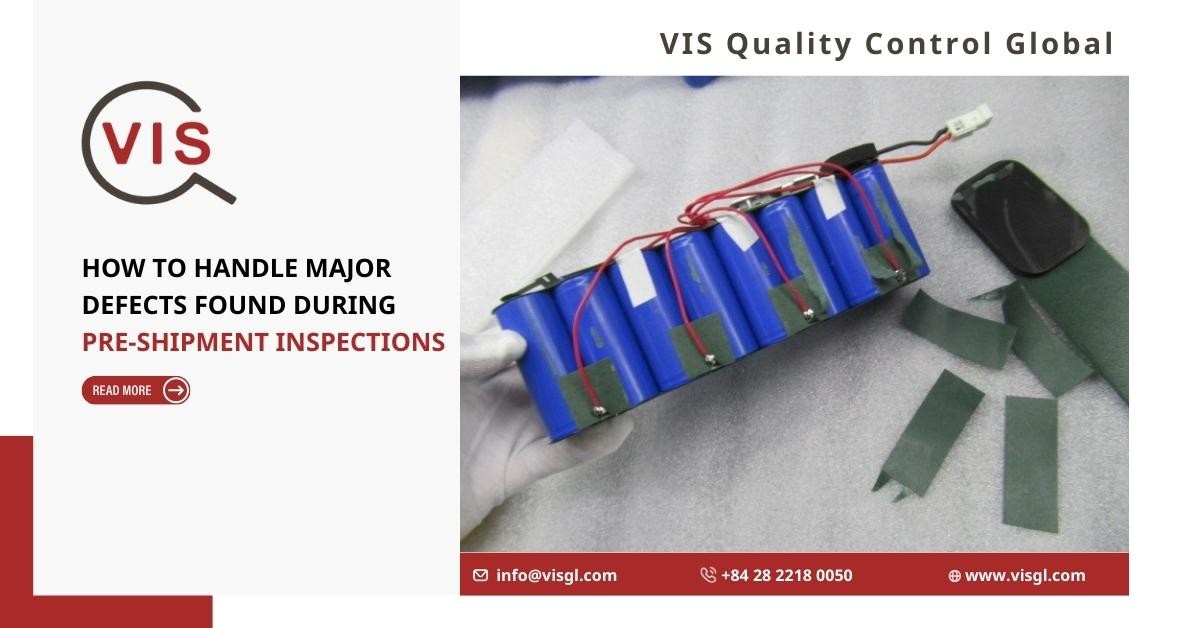
Pre-shipment inspections (PSI) play a crucial role in the quality assurance process, ensuring that products meet buyer requirements and international quality standards before they leave the factory. However, there are times when major defects are discovered during an inspection – issues serious enough to delay shipments, increase costs, or jeopardize buyer satisfaction.
So, what should a buyer or inspection team do when major defects are found during a PSI?
This article outlines the proper steps to take, offering practical guidance on identifying, managing, and preventing major defects to ensure the final shipment meets all required standards.
What Are Major Defects in Pre-Shipment Inspections?
Major defects are quality issues that significantly affect product usability, functionality, or appearance. These defects often make the product unsuitable for sale or pose potential safety risks.

Common examples include:
- Functional failures (e.g., electronic devices not working properly)
- Serious cosmetic issues (cracks, discoloration, deep scratches)
- Missing, incorrect, or mismatched parts
- Non-compliance with safety regulations or market standards
Any inspection batch found with these types of defects must be carefully reviewed and addressed before the shipment can proceed.
Immediate Actions When Major Defects Are Found

When inspectors identify major defects, it is essential to act quickly and systematically to prevent defective products from reaching the end customer.
1. Halt the Shipment
Immediately stop the shipment of the affected batch. This prevents defective items from entering the market and protects the buyer’s brand reputation.
2. Assess the Defects
Conduct a detailed evaluation of the issues, including:
- The number of defective units
- Whether the problem is isolated or widespread
- Photo and video documentation
- Detailed written records
This information is essential for determining the next steps and validating findings.
3. Notify the Supplier and Buyer
Provide both supplier and buyer with a clear, evidence-based report detailing:
- The type and extent of defects
- Potential causes
- Impact on the shipment
Transparent communication ensures that all parties understand the situation and can collaborate on a solution.
Identifying the Root Cause of Major Defects
A thorough root cause analysis helps prevent recurrence and determines appropriate corrective actions. Key areas to investigate include:
- Production processes: Assembly issues, operator errors, or incorrect procedures
- Raw materials: Low-quality or non-conforming materials used in production
- Equipment and tooling: Malfunctioning machinery or poor calibration
- Packaging processes: Improper packing that leads to product damage
Understanding the root cause allows teams to address not just the defect but the systemic issues behind it.
Exploring Practical Solutions
Once the defects and root causes are identified, several corrective measures may be considered:
1. Rework or Repair
If the defects can be corrected without impacting overall product quality, the supplier may rework or repair the affected items. Ensure that:
- Rework follows approved procedures
- Corrective actions meet buyer standards
- Inspectors verify the results afterward
2. Product Replacement
If defects are severe or widespread, the supplier may need to reproduce or replace the defective units. This is often the best option to maintain product integrity and buyer confidence.
3. Price Reduction or Discount
If the buyer chooses to accept products with minor imperfections, a negotiated discount may be appropriate. Agreements must be documented clearly to avoid disputes later.
Re-Inspection After Corrective Actions

Once rework, repair, or replacement has been completed, a second inspection should be conducted to verify that:
- The defects have been fully resolved
- No new issues have been introduced
- The final goods now meet all quality standards
Only after passing re-inspection should the shipment be approved.
Updating Documentation and Quality Control Records
For transparency and future reference, the following documents should be updated:
- Inspection reports
- Corrective action reports
- Supplier and buyer correspondence
- Production or quality logs
Accurate records help prevent future issues and support continuous improvement efforts.
Preventing Future Defects Through Continuous Improvement
To minimize the risk of major defects occurring again, Vis Quality Control Global encourages the following strategies:
Supplier Audits
Regular audits help ensure that production facilities comply with expected quality standards.
Clearer Communication
Strengthen communication between buyers, suppliers, and inspection teams to avoid misunderstandings in product specifications.
Enhanced Quality Control Procedures
Integrate quality checks into early production stages to detect issues before final inspection.
Conclusion
Major defects found during pre-shipment inspections can be highly disruptive, but they can also be effectively managed with the right approach. By halting shipment, communicating transparently, analyzing root causes, and implementing corrective actions, businesses can protect product quality and maintain strong buyer–supplier relationships.
With structured procedures and continuous improvement, Vis Quality Control Global ensures that products consistently meet the highest quality standards before reaching customers worldwide.
