
 Info@visgl.com













Inspection News
Quality Inspection of Cookware for Export to the European and U.S. Markets
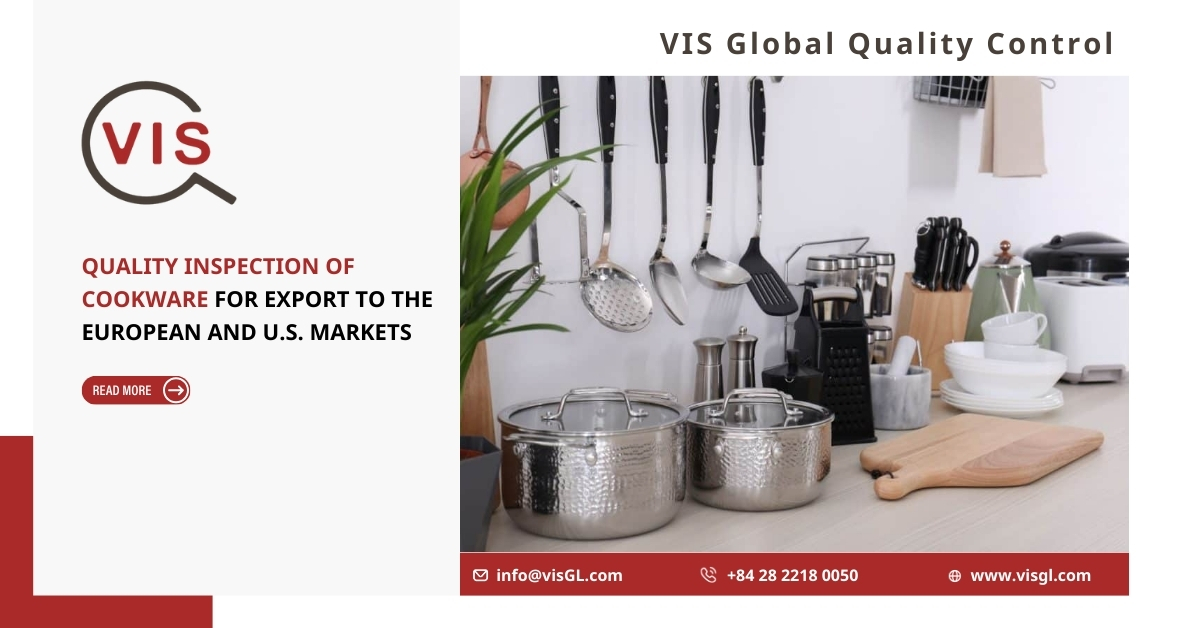
Cookware is among the most widely exported household product categories from Asia to Europe and the United States. As global demand continues to rise for cookware that is high-quality, durable, and safe for food contact, buyers place strong emphasis on regulatory compliance and performance reliability.
In this context, Pre-Shipment Inspection (PSI) and comprehensive Quality Inspection services conducted by VIS Global Quality Control play a critical role in safeguarding product quality, preventing costly returns, and protecting brand reputation in international markets.
Common Cookware Materials and Their Characteristics
Stainless Steel Cookware
Stainless steel cookware offers excellent corrosion resistance, long-term durability, and chemical stability, ensuring no reaction with food. It is well-suited for high-temperature cooking applications.

Inspection Focus by VIS Global Quality Control:
- Verification of stainless steel grade, commonly SUS 304 or SUS 316
- Assessment of surface finish consistency, whether mirror-polished or brushed
- Inspection of welding integrity, handle strength, and magnetic base attachment
- Confirmation that products are free from rust, dents, deformation, or sharp edges
Aluminum Cookware
Aluminum cookware is lightweight and provides rapid heat conduction, although it is more susceptible to deformation under excessive pressure.
Inspection Focus:
- Confirmation of aluminum alloy composition, typically 3003, 6061, or anodized aluminum
- Non-stick coating adhesion testing
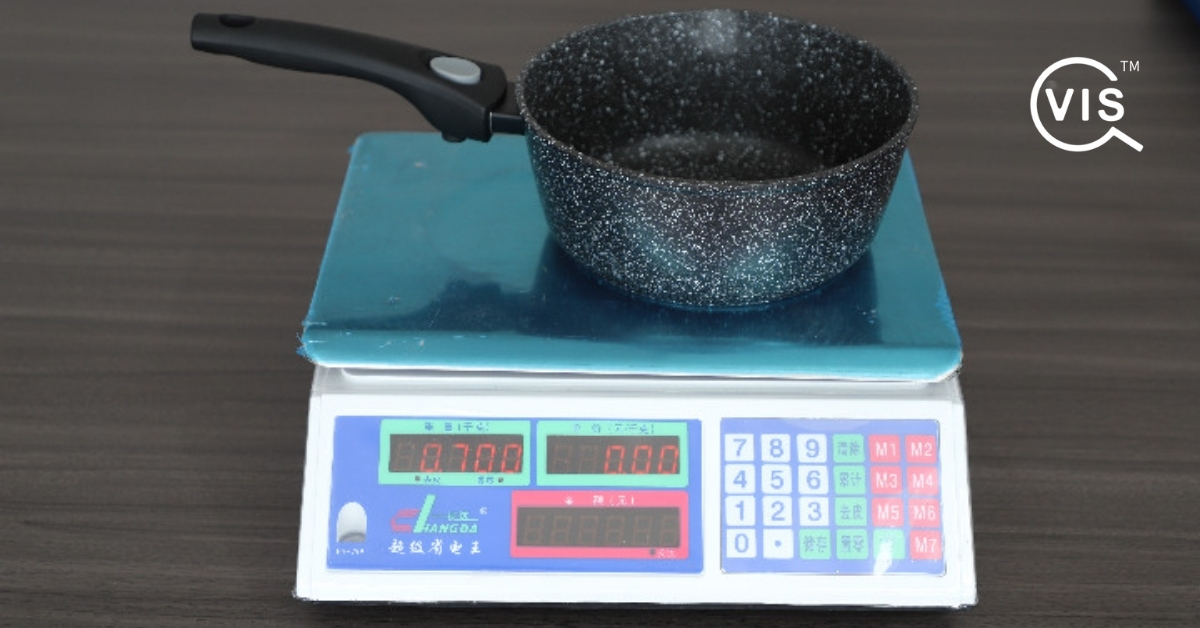
- Verification of bottom flatness and uniform wall thickness
- Cross-cut adhesion testing to assess coating durability
Cast Iron Cookware
Cast iron cookware delivers excellent heat retention, uniform heating, and an extended service life when properly maintained.
Inspection Focus:
- Consistency of weight and wall thickness
- Examination of enamel coating for cracks, pinholes, bubbles, or uneven coloration
- Evaluation of handle and lid fitment
- Moisture resistance testing to ensure rust protection during transportation
Non-Stick Cookware
Non-stick cookware is typically coated with PTFE (Teflon) or ceramic coatings, allowing easy cleaning and healthier, low-oil cooking.
Inspection Focus:
- Coating adhesion and scratch resistance testing
- Verification of food-grade compliance certifications such as FDA and LFGB
- Inspection of coating thickness uniformity and overall visual quality
Copper Cookware
Copper cookware provides superior thermal conductivity and is usually lined with stainless steel to prevent copper migration into food.
Inspection Focus:
- Measurement of copper layer thickness
- Inspection for surface oxidation, stains, or discoloration
- Evaluation of bonding quality between copper body and inner liner
Technical Requirements and Export Standards
Cookware exported to Europe and the United States must comply with specific technical regulations applicable to each destination market.
European Market (EU)
Applicable Regulations and Standards:
- EC No. 1935/2004: Ensures materials in contact with food are safe and do not alter food composition
- LFGB (Germany): Testing requirements for heavy metals, coatings, and migration limits
- EN 12983 & EN 12983-1: Safety and performance standards covering cookware construction, handle strength, and heat resistance
United States Market (USA)
Applicable Regulations and Standards:
- FDA 21 CFR 175.300: Safety requirements for food contact coatings
- ASTM F2999: Performance testing standards for non-stick cookware
- California Proposition 65: Restrictions on lead, cadmium, PFOA, and other hazardous substances
Key Inspection Points During Quality Inspection
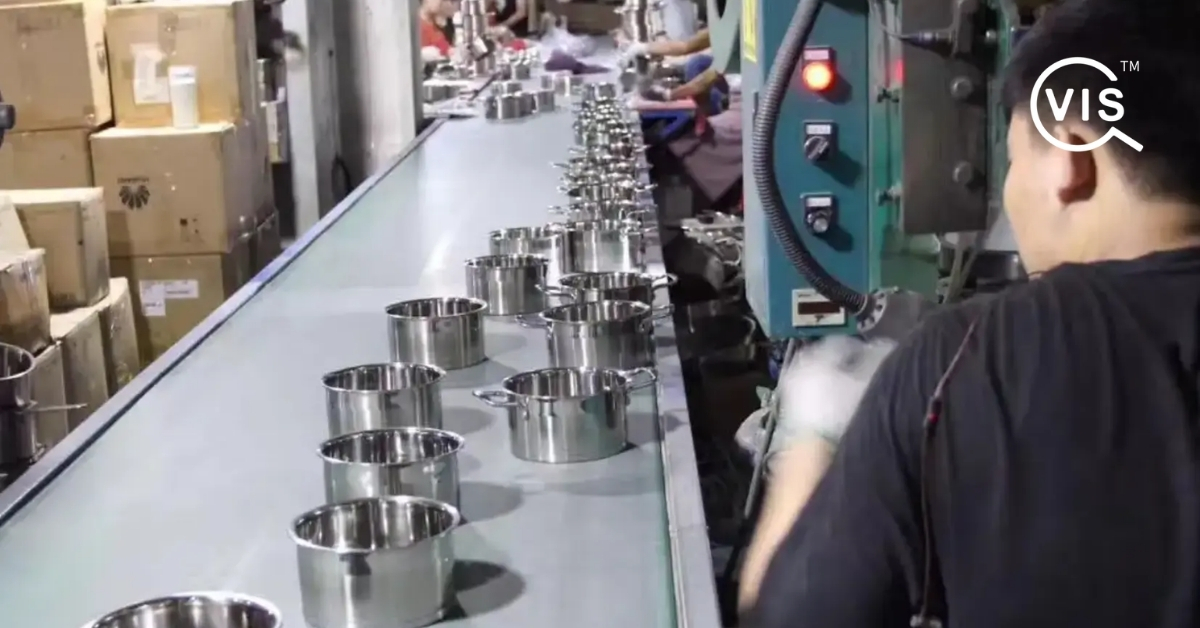
A professional Pre-Shipment Inspection conducted by VIS Global Quality Control includes, but is not limited to, the following evaluation criteria:
- Visual and Dimensional Inspection: Verification of product appearance, dimensions, and surface finish against approved samples
- Functional Testing: Assessment of heating performance, handle strength, lid fitment, and leakage resistance
- Coating Adhesion Testing: Cross-cut or tape tests to evaluate non-stick coating durability
- Material Verification: Confirmation of stainless steel grades, material thickness, magnetic properties, and aluminum alloy composition
- Packaging Inspection: Review of labeling accuracy (FDA/LFGB compliance), barcode verification, carton drop testing, and shipping marks
- Safety and Compliance Review: Validation of conformity with EU and US food contact material regulations
Importance of Pre-Shipment Inspection
Conducting a Pre-Shipment Inspection prior to factory release enables exporters to ensure:
- Full compliance with customer specifications and international regulatory standards
- Early detection of coating defects, surface damage, or assembly non-conformities
- Reduced risk of shipment rejection, claims, or returns at the destination market
- Assurance that packaging, labeling, and documentation meet import and customs requirements
By working with VIS Global Quality Control, exporters gain a reliable inspection partner capable of identifying potential issues before shipment, thereby ensuring consistent product quality and sustained customer satisfaction.
Conclusion
Cookware manufacturing involves a wide range of materials, each requiring specialized inspection methods and strict compliance with international regulations. Through systematic Pre-Shipment Inspection and Quality Inspection services provided by VIS Global Quality Control, suppliers can ensure that cookware exported to Europe and the United States meets all functional, safety, and regulatory requirements – effectively protecting brand integrity and ensuring end-user safety.
