
 Info@visgl.com














Inspection News
Quality Issues Commonly Found in Mechanical Products
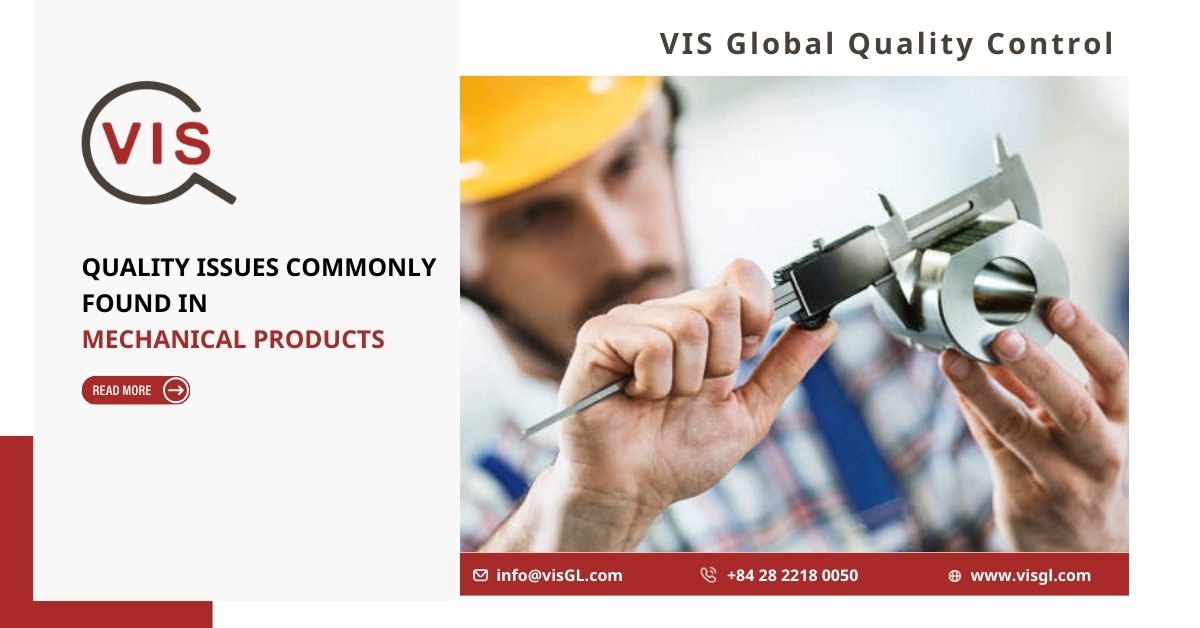
Mechanical products—hardware, machine parts, tools, automotive components, valves, pumps, castings—are built to withstand stress, friction, and repetitive use. They need to be precise, durable, and safe. Which is exactly why quality issues in this category tend to carry heavier consequences than in most other product types. A defective garment might get returned. A defective mechanical component can cause equipment failure, injury, or a full production shutdown.
At Vis Global Quality Control, we inspect mechanical products across a wide range of industries and manufacturing regions. Here are the quality issues we encounter most frequently—and why catching them before shipment matters more than most buyers realize.
Dimensional Inaccuracies
This is the most common issue in mechanical manufacturing, and often the most consequential. If a part doesn’t meet its dimensional tolerances, it won’t fit, it won’t function properly, or it’ll cause premature wear on the components it connects to.
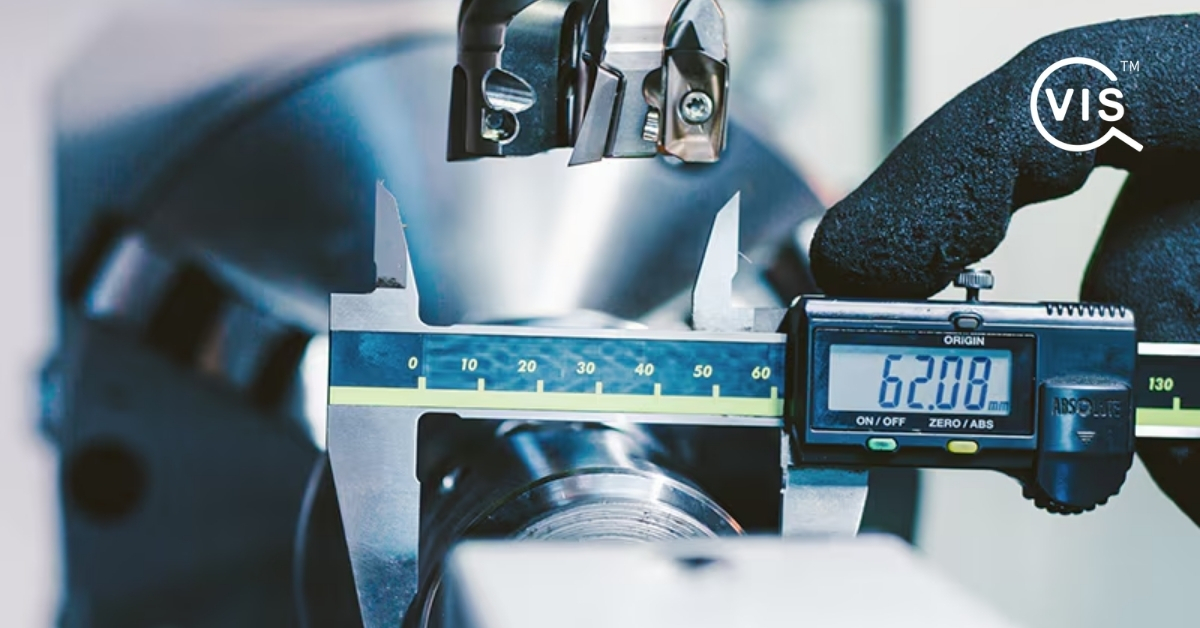
Dimensional errors typically stem from improperly calibrated machinery, worn-out tooling, or operators misreading technical drawings. In some cases, the factory’s measurement equipment itself is inaccurate—a problem that compounds across an entire production run.
What makes this tricky is that many dimensional deviations are invisible to the naked eye. A shaft that’s 0.3mm oversize or a bore that’s slightly off-center won’t look wrong, but it’ll fail in assembly. Catching these issues requires proper gauges, calipers, micrometers, and sometimes coordinate measuring machines—applied consistently, not just on the first few samples off the line.
Surface Defects
Scratches, dents, pitting, burrs, rough finishes, and uneven coatings are all surface-level issues that show up regularly in mechanical product inspections. Some are cosmetic. Others directly affect performance.
A burr left on a machined edge, for example, can interfere with how two parts mate together. Pitting on a bearing surface accelerates wear. An uneven powder coat doesn’t just look bad—it may fail to protect the underlying metal from corrosion in the field.
Surface defects often result from poor handling during production or transport, inadequate deburring after machining, or inconsistent finishing processes. They’re among the easiest defects to spot visually, yet they’re also among the most commonly overlooked when factories self-inspect under time pressure.
Welding and Joint Failures
For mechanical products that involve welding, brazing, or soldering, joint integrity is critical. A weak weld doesn’t just compromise one component—it can cause the entire assembly to fail under load.
Common welding defects include porosity, incomplete penetration, undercut, cracks, and excessive spatter. These can result from incorrect welding parameters, contaminated surfaces, unsuitable filler materials, or simply insufficient skill on the part of the welder.
Visual inspection catches some welding issues, but not all. Subsurface defects like internal porosity or lack of fusion often require non-destructive testing methods to detect. For safety-critical applications, buyers should specify the inspection methods and acceptance criteria in advance rather than relying on the factory’s default standards.
Material Substitution and Non-Compliance
Material quality is foundational. If the wrong grade of steel, aluminum, or alloy is used, the product may look identical but behave very differently under stress, heat, or corrosive conditions. Material substitution—whether intentional to reduce cost or accidental due to poor inventory management—is a persistent risk in mechanical manufacturing.
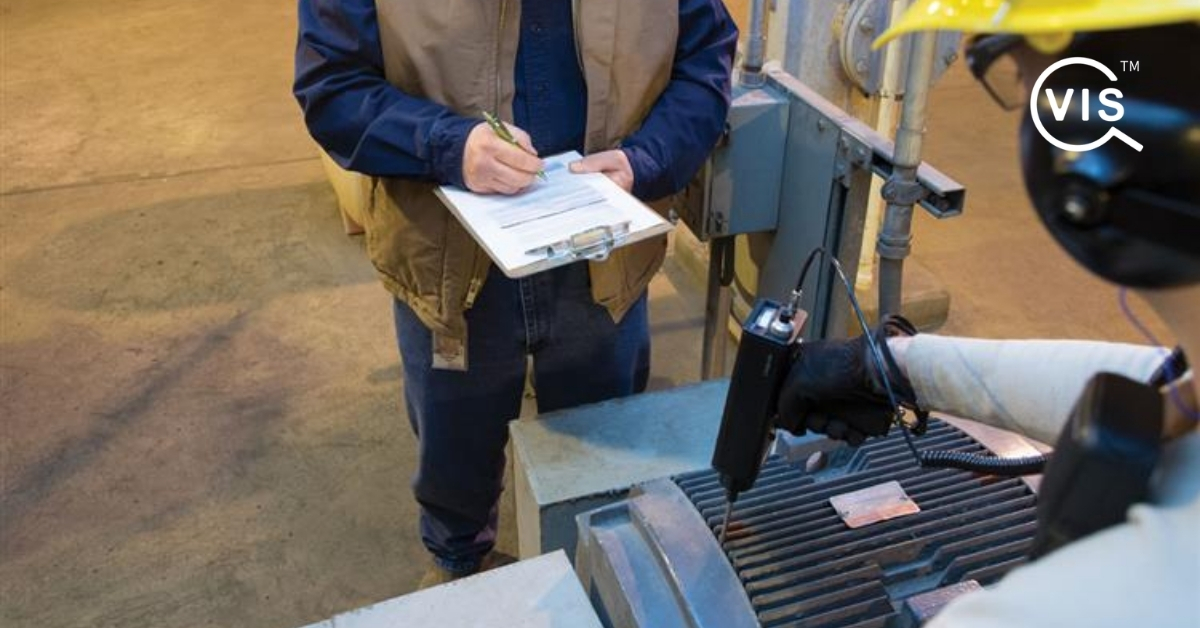
This issue is particularly dangerous because it’s nearly impossible to detect through visual inspection alone. Verifying material composition requires mill certificates, material test reports, or in some cases, portable spectrometer testing during inspection.
Buyers sourcing mechanical products should always require documented material certification and verify it independently. Trusting the factory’s word on material grade without verification is one of the most common—and most costly—mistakes in this product category.
Assembly and Fitment Problems
Mechanical products that arrive as assembled units frequently present fitment issues. Misaligned parts, loose fasteners, incorrect torque values, missing components, or reversed assembly sequences are all problems that inspection teams encounter regularly.
These issues typically trace back to poorly documented assembly procedures, inadequate worker training, or the absence of in-process quality checks. In high-volume production environments, small errors at the assembly stage can propagate quickly across an entire batch if nobody catches them early.
Functional testing during inspection—checking that moving parts operate correctly, that mechanisms engage and disengage as intended, and that assemblies withstand basic load or pressure tests—is the most reliable way to identify fitment problems before shipment.
Corrosion and Coating Failures
Mechanical products destined for outdoor, marine, or high-humidity environments need adequate surface protection. Inadequate coating thickness, poor adhesion, or using the wrong protective finish can lead to premature corrosion—sometimes within weeks of installation.
Coating quality is assessed through thickness gauges, adhesion tests, and visual checks for coverage uniformity. These are straightforward but frequently skipped under deadline pressure. A product that looks perfectly finished at shipment can start rusting on the shelf if the coating wasn’t applied properly.
Why These Issues Keep Happening
The recurring theme across all these defects is that they’re preventable. They happen because quality control is either absent, inconsistent, or applied too late in the process. Factories working under tight margins and aggressive timelines naturally prioritize output over inspection. The role of independent quality control is to provide a counterbalance: an objective evaluation of the product against the buyer’s specifications, performed by someone whose only incentive is accuracy.

Vis Global Quality Control provides inspection services tailored to the specific demands of mechanical products. Our inspectors carry the tools and technical knowledge needed to evaluate dimensional accuracy, surface quality, weld integrity, material documentation, and functional performance—catching the issues that matter before they become your customer’s problem.
If you’re sourcing mechanical components or assembled products, get in touch with Vis Global Quality Control to discuss how we can support your quality requirements.
