
 Info@visgl.com











Industries & Services
What Happens After a Failed Inspection? A Step-by-Step Guide for Buyers
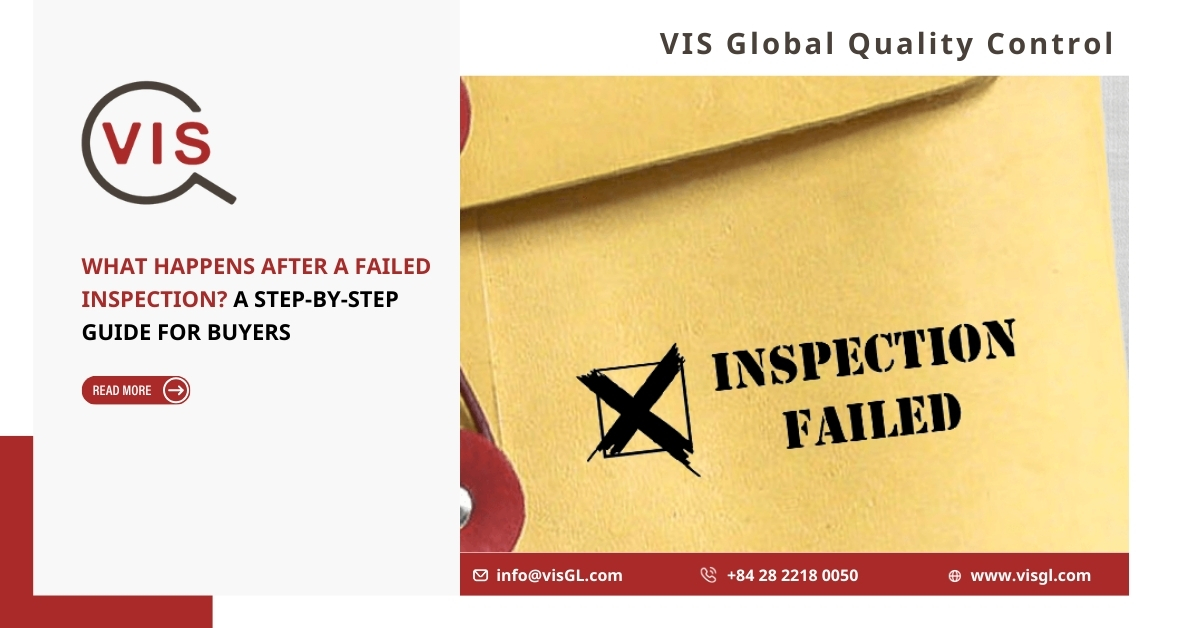
You’ve been tracking your production timeline for weeks. The factory says everything is on schedule. Then the inspection report lands in your inbox – and the result is “Failed.”
It’s a gut-punch moment, but it doesn’t have to be the end of the world. A failed inspection is not the same as a lost order. What matters most is what you do next.
At Vis Global Quality Control, we walk buyers through this situation regularly. Here’s what typically happens and how you can navigate it effectively.
First, Understand What “Failed” Actually Means
A failed inspection doesn’t always mean your entire order is ruined. Inspections use standardized sampling methods – most commonly AQL (Acceptance Quality Limit) tables – to evaluate a random sample from the production lot. If defects exceed a predetermined threshold, the result is recorded as a fail.
But the reasons behind that fail vary widely. Sometimes the issue is cosmetic – slightly off colors, minor surface marks, or packaging that doesn’t match expectations. Other times, it’s more serious: structural defects, incorrect dimensions, or failed functional tests.
Before you react, read the full report carefully. Look at the types of defects, how many were critical versus minor, and whether problems are isolated or widespread. The severity should guide your next steps – not the pass/fail label alone.
Don’t Burn Bridges With Your Supplier
The first instinct after a failed inspection is often to call the supplier and let them have it. That’s understandable, but rarely productive. Losing your temper damages the relationship and makes the factory less willing to cooperate on a solution.
Instead, approach the conversation with facts. Share the inspection report, point to specific defects with photo evidence, and ask the supplier to explain what went wrong. The goal at this stage is information gathering, not blame. You need to understand the root cause before deciding on the right path forward.
Assess Your Options
Once you have a clear picture of the problems, you’ll typically have several options. Which one makes sense depends on the defects, your timeline, and how much flexibility you have with end customers.
Accept the goods as-is. If defects are minor and won’t affect function or customer experience, you might ship the order anyway. But be careful – accepting subpar quality once can signal to the supplier that lower standards are tolerable going forward.
Negotiate a discount. Some buyers accept goods with minor cosmetic defects in exchange for a price reduction. Just make sure the discount reflects the actual impact on the product’s value.
Request rework. For fixable defects – stitching errors, assembly mistakes, packaging issues – asking the factory to rework affected units is often the most practical solution. This adds time but preserves the order without new production.
Sort and ship. If only a percentage of units are defective, the factory can sort the entire lot, pull out bad units, and ship only those that pass. This works when the defect rate is close to the AQL limit but a portion of goods are still fine.
Reject the order. In cases of severe or widespread defects – especially those related to safety or regulatory compliance – rejecting the shipment may be the only responsible choice.
Always Request a Re-Inspection
Whatever corrective action you agree on, don’t skip the re-inspection. This is a mistake we see too often. The factory says they’ve fixed the problems, the buyer takes their word for it, and the goods arrive at the destination with the same issues – or new ones.
A re-inspection confirms that corrective work was actually done properly and that no additional problems were introduced during rework. Think of it as your safety net before the shipment leaves the factory.
At Vis Global Quality Control, we handle re-inspections with the same rigor as the original check. Our inspectors verify that every flagged issue has been addressed and evaluate reworked goods against the same specifications and AQL standards.
Document Everything With a Corrective Action Plan
A failed inspection shouldn’t just be a fire to put out – it should prevent the next one. The best tool for this is a Supplier Corrective Action Report (SCAR), sometimes called a CAPA plan.
This document should identify the problems found, their root causes, the corrective steps the factory will take, and a timeline for implementation. It should be completed by someone at the factory with enough authority and technical knowledge to actually make changes – not just a sales contact filling out a form.
Send this within the first few days after the failure while details are fresh. Keep a copy on file. If the same issues appear on the next order, you’ll have documentation to support a much firmer conversation.
Strengthen Your Process for Next Time
Every failed inspection reveals a gap – in communication, specifications, supplier capability, or oversight. The buyers who improve over time treat each failure as data rather than just a setback.
A few practical adjustments that consistently reduce failure rates: inspect earlier in production when 20–30% of the order is complete so problems get caught before the full lot is finished. Provide detailed specifications and reference samples before production starts. Request pre-production samples and approve them before mass manufacturing begins. And maintain regular contact with the factory so small issues don’t grow into big ones unnoticed.
If you’ve been relying on your supplier’s own quality team, consider bringing in a third-party inspection partner. Independent oversight removes the conflict of interest and gives you an unbiased view of what’s happening on the factory floor.
A Failed Inspection Isn’t the End – It’s a Turning Point
Receiving a failed inspection report is stressful. But with the right response, it becomes a manageable situation rather than a disaster. Stay calm, gather information, make decisions based on facts, and build systems that reduce the chances of it happening again.
At Vis Global Quality Control, we’ve helped buyers across industries recover from inspection failures and come out stronger. Whether you need a re-inspection, a factory audit, or ongoing quality oversight, our team is ready to support you.
Reach out to us today – we’ll help you turn a setback into a better supply chain.
