
 Info@visgl.com










Industries & Services
What to Do When Your Product Fails a Quality Inspection: A Practical Guide for Importers
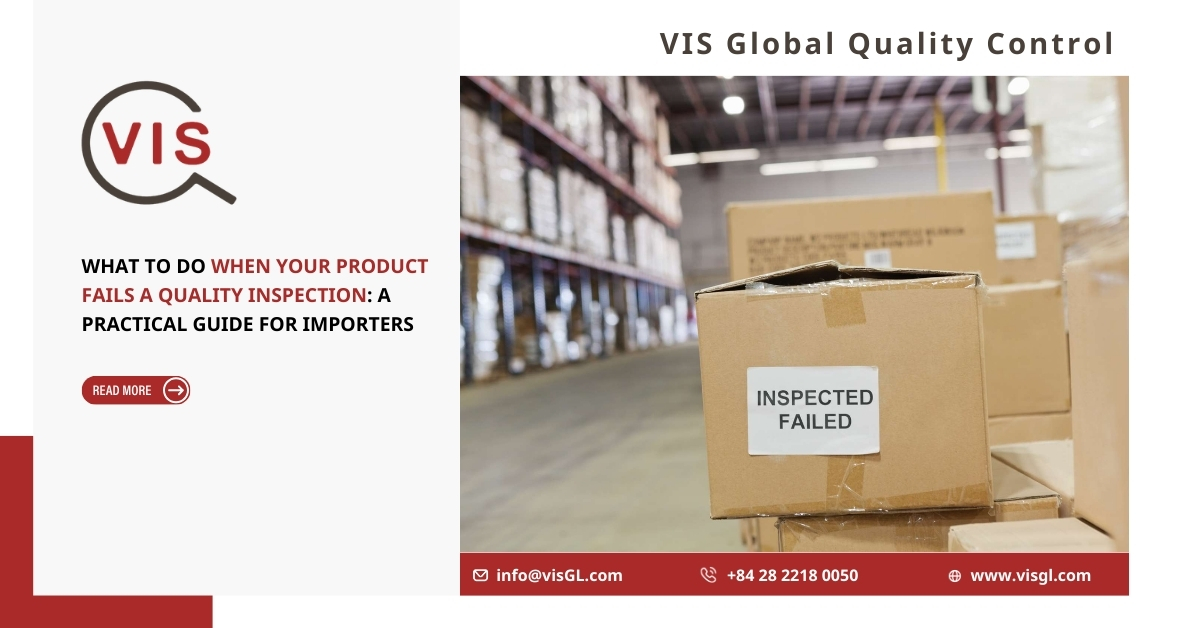
In this article, we outline the key actions you should take when your product fails a quality inspection in Asia or the European Union, including manufacturing locations such as China, Vietnam, Cambodia, and EU-based factories.
A failed inspection is never good news—but it is not a disaster. Identifying issues before shipment protects your customers, your brand, and your long-term supply chain.
What Does a “Failed” Inspection Really Mean?
Do not rush to cancel your order. A failed inspection result should be evaluated in context.
Most inspections are conducted using AQL (Acceptance Quality Limit) tables, an internationally recognized statistical sampling method. Inspectors evaluate a portion of the production lot and estimate overall quality. If detected defects exceed predefined limits, the inspection is classified as “Failed.”

Understanding why the inspection failed is more important than the failure itself.
Common Reasons Quality Inspections Fail
Across Asia and the EU, inspections commonly fail due to:
- Incomplete quantity at the time of inspection
- Incorrect or non-compliant labeling
- Packaging not meeting buyer or regulatory requirements
- Cosmetic defects (color, size, logo, surface finish)
- Poor workmanship leading to high defect rates
- Failed testing or regulatory non-compliance, especially for EU markets
- Tolerance differences between buyer expectations and inspection standards
Some of these issues may still be acceptable depending on your market and risk tolerance.
Misconceptions About Failed Inspections
A failed inspection does not automatically mean that your shipment must be canceled or delayed. An inspection result should be treated as an important reference point rather than a final verdict.
The responsibility for the final decision always lies with the buyer. Each case must be evaluated individually, taking into account the specific findings outlined in the inspection report.
Key considerations include the severity of the defects, whether the issues affect product safety or compliance, and the regulatory requirements of the destination market.
In addition, buyers should assess the potential commercial and brand impact of shipping the goods in their current condition before determining the most appropriate next step.
Key Steps to Take After an Inspection Fails
1. Understand the Issue Clearly
Before taking action:
- Speak with both inspectors and suppliers
- Request photos and detailed findings
- Confirm which defects are critical versus acceptable
2. Decide on an Action Plan
Do not accept goods that fail to meet your quality standards. Depending on severity, you may:
- Refuse the goods
- Request rework and re-inspection (recommended)
- Negotiate a discount
- Sort or remove defective units
- Ship as-is (only if risks are acceptable)
3. Issue a Supplier Corrective Action Report (SCAR)
A SCAR should be issued within 72 hours and include:
- Identified problems
- Root causes
- Corrective actions
- Implementation timeline
Ensure the SCAR is completed by factory personnel with authority and training in root cause analysis.
4. Re-Inspect Before Shipment
Always confirm that corrective actions were implemented and no new issues were introduced.
Preventing Future Inspection Failures
To reduce the risk of future inspection failures, buyers should avoid applying excessive price pressure on suppliers. In manufacturing, price is directly correlated with quality, and aggressive cost cutting often leads to compromised results.
Conducting quality inspections at an early stage of production—typically when 20–30% of the goods are completed—allows issues to be identified before they escalate and become costly to fix.

Clear product specifications and defined quality tolerances should always be provided to suppliers. This helps eliminate ambiguity and ensures that expectations are aligned from the start.
Pre-production samples should be requested, reviewed, and formally approved before mass production begins. These samples serve as the benchmark for all subsequent inspections.
Finally, increasing on-site oversight during production can significantly improve quality outcomes. This can be done either through direct factory visits or by appointing a qualified quality assurance agency to monitor production on your behalf.
Final Considerations
You cannot expect suppliers to fully change their operations for one buyer. If quality issues persist despite corrective actions, the supplier itself may be the problem.
Manufacturing in Asia and the EU always involves risk, but disciplined quality control significantly reduces it.
Get Support from VIS Global Quality Control
If your product has failed a quality inspection, VIS Global Quality Control can help you evaluate the report, manage corrective actions, and protect your supply chain.
Contact our team for a free 15-minute consultation and clear guidance on your next steps.
