
 Info@visgl.com













Inspection News
Why Supplier Quality Management Matters in Modern Manufacturing
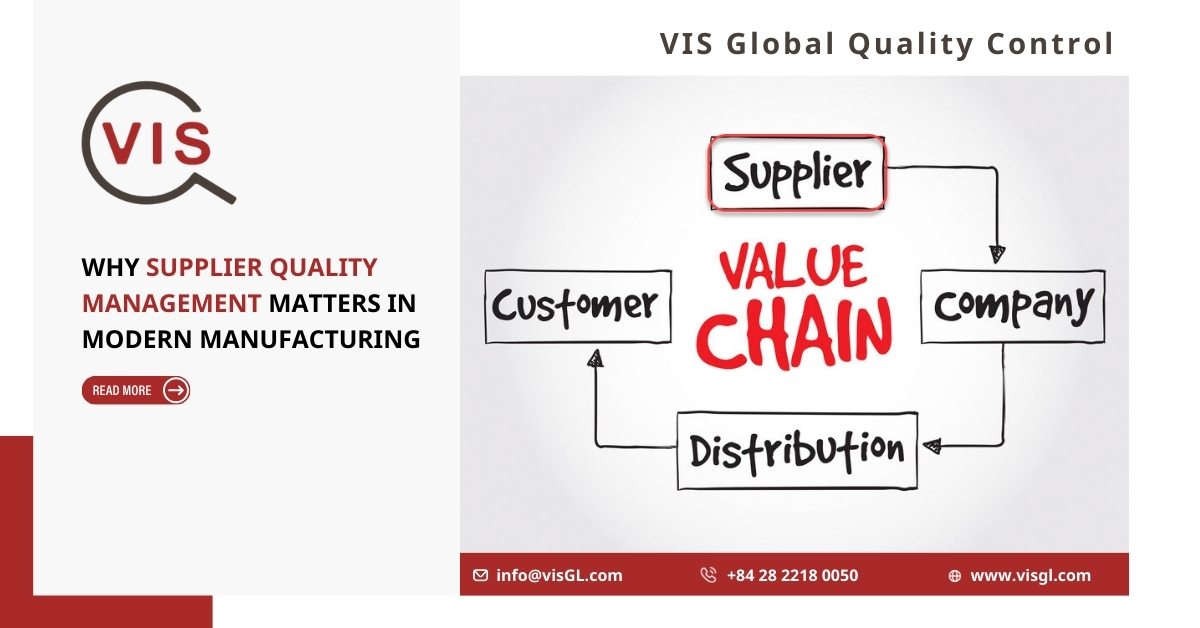
In contemporary manufacturing, maintaining consistent product quality has become increasingly complex due to global sourcing, multi-tier supply chains, and rising customer expectations. Supplier Quality Management (SQM) has therefore emerged as a critical discipline within supply chain and quality management. It provides manufacturers with a structured approach to controlling supplier performance and ensuring that incoming materials, components, and services meet defined quality requirements.
Organizations involved in quality inspection and supply chain oversight, such as Vis Global Quality Control, often reference SQM as a practical framework for aligning supplier output with manufacturing and customer expectations.
Defining Supplier Quality Management
Supplier Quality Management refers to the systematic methods used to ensure that suppliers consistently comply with quality standards, technical specifications, and regulatory requirements. Rather than relying solely on final inspection, SQM addresses quality across the entire supplier lifecycle, from initial selection to ongoing performance evaluation and continuous improvement.
Key SQM activities include supplier qualification, performance monitoring, certification verification, quality agreement management, and corrective action implementation. Together, these elements form a controlled process through which supplier quality risks can be identified, measured, and mitigated. The overarching objective is to maintain predictable and stable quality outcomes throughout the supply chain.
Importance of Supplier Quality Management in Manufacturing
In manufacturing operations, supplier quality has a direct and measurable impact on final product performance. Defects or inconsistencies at the supplier level often result in production disruptions, increased scrap and rework, and potential customer dissatisfaction.
Effective SQM reduces these risks by establishing clear expectations and systematic oversight of supplier performance. Early detection of quality issues allows manufacturers to address problems before they escalate into larger operational or compliance challenges. This proactive approach also lowers the likelihood of recalls, warranty claims, and regulatory penalties.
Beyond risk management, SQM contributes to operational efficiency. Higher-quality incoming materials lead to smoother production flows, reduced inspection effort, and improved inventory control. Over time, these efficiencies translate into lower manufacturing costs and more reliable delivery performance.
Core Elements of Supplier Quality Management
Supplier Selection and Evaluation
Supplier quality management begins with structured supplier selection and evaluation. Potential suppliers are assessed using defined criteria that typically include historical quality performance, process capability, financial stability, technical competence, and compliance with applicable standards.
Objective evaluation methods, such as performance scoring and comparative analysis, help manufacturers identify suppliers that can reliably meet quality and production requirements. Regular re-evaluation ensures that suppliers continue to meet expectations as business and regulatory conditions evolve.
Supplier Certification
Supplier certification provides formal confirmation that a supplier operates in accordance with recognized quality management standards. Certifications may be industry-specific or based on international frameworks such as ISO 9001.
Certification alone is not sufficient; ongoing compliance must be verified through periodic audits and performance reviews. This continuous verification helps maintain consistent quality levels and reinforces supplier accountability.
Quality Agreements
Quality agreements define the technical, procedural, and quality-related responsibilities between manufacturers and suppliers. These agreements typically specify acceptance criteria, inspection methods, documentation requirements, and processes for managing non-conforming products.
Clear and well-maintained quality agreements reduce ambiguity and provide a common reference point when quality issues arise. Regular review ensures alignment with changing requirements and production conditions.
Best Practices in Supplier Quality Management
Collaboration and Communication
Effective SQM relies on collaboration between manufacturers and suppliers. Open communication supports transparency, facilitates faster problem resolution, and encourages shared responsibility for quality outcomes.
Clear documentation of quality requirements and regular performance discussions help ensure that suppliers understand expectations and receive timely feedback.
Continuous Improvement
Continuous improvement is a central principle of supplier quality management. Performance data, audit findings, and corrective action results provide insight into supplier capabilities and areas for enhancement.
By tracking supplier quality metrics and reviewing trends over time, manufacturers can identify recurring issues and implement targeted improvement actions. This approach supports long-term quality stability rather than short-term corrective fixes.
The Role of Technology in Supplier Quality Management
Digital tools have become increasingly important in supporting SQM. Centralized systems allow organizations to store and analyze supplier data, including performance metrics, audit results, and certification status. This improves visibility across the supply chain and supports data-driven decision-making.
Automation enhances SQM by enabling real-time reporting, trend analysis, and alerts for quality deviations or expiring certifications. Organizations engaged in inspection and quality oversight, including Vis Global Quality Control, often highlight the value of digital systems in improving traceability and consistency in supplier quality processes.
Challenges in Supplier Quality Management
Supplier non-conformance remains a common challenge in manufacturing. When suppliers fail to meet specifications, manufacturers must respond quickly to prevent production delays or quality escapes. This requires structured processes for issue identification, root cause analysis, corrective action, and verification of effectiveness.

Supply chain complexity further increases SQM challenges. Multi-tier supplier networks, geographic dispersion, and diverse regulatory environments make it more difficult to maintain uniform quality standards. Global sourcing can also introduce communication and cultural barriers that affect quality alignment.
Addressing these challenges requires standardized requirements, consistent performance monitoring, and effective coordination across the supply chain.
Impact of Effective Supplier Quality Management
When implemented effectively, Supplier Quality Management delivers measurable benefits. Reduced defect rates, lower rework, and fewer returns contribute directly to cost savings and operational stability. Improved supplier performance also enhances product consistency and reliability.
From a broader perspective, strong SQM practices support customer satisfaction by ensuring that products meet quality and performance expectations. Over time, this consistency strengthens brand reputation and competitiveness.
Supplier Quality Management is therefore a foundational element of modern manufacturing quality systems. By providing structure, transparency, and continuous improvement, SQM enables manufacturers to manage supplier risk effectively while supporting sustainable production outcomes.
