
 Info@visgl.com













Inspection News
Why Third-Party Inspection Is Critical in Cross-Border Trade
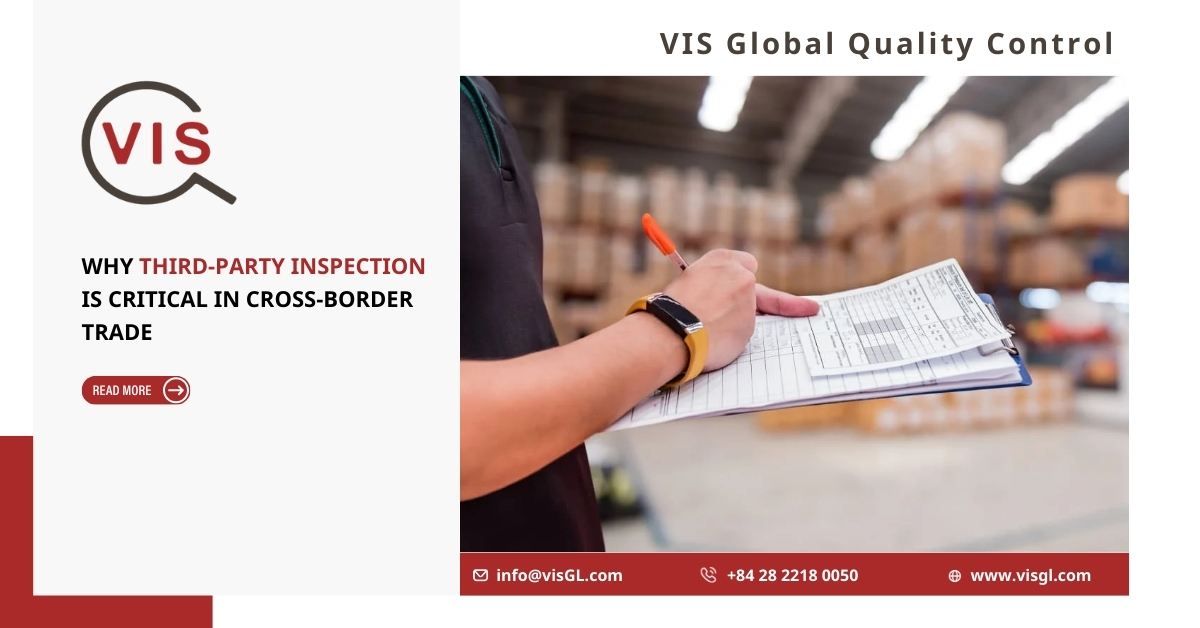
In today’s highly interconnected global economy, cross-border trade offers significant growth opportunities while simultaneously introducing complex risks related to quality, compliance, and supply chain transparency. As production networks expand across multiple countries and regulatory environments become increasingly stringent, third-party inspection has emerged as a critical pillar in effective quality control and international trade management.

Independent Verification as the Foundation of Trust
Cross-border transactions often involve buyers and suppliers operating in different legal, cultural, and operational contexts. Third-party inspection provides independent, objective verification of product quality, quantity, and conformity to contractual requirements. By acting as a neutral authority, inspection services eliminate ambiguity, reduce misunderstandings, and establish a shared standard of accountability. This impartial assessment strengthens trust between trading partners and supports long-term, sustainable commercial relationships.
Managing Regulatory Complexity Across Global Markets
International trade is governed by a wide array of regulations, technical standards, and market-specific compliance requirements. Failure to meet these obligations can result in shipment delays, customs rejections, financial penalties, or reputational damage. Third-party inspection plays a vital role in ensuring goods comply with relevant international and local regulations before shipment. Through systematic audits and inspections, businesses can proactively address compliance risks and maintain smooth access to global markets.
Proactive Risk Mitigation and Quality Assurance
Quality issues discovered after shipment can lead to costly recalls, production interruptions, and loss of customer confidence. Third-party inspection enables early detection of defects and non-conformities through structured checkpoints such as pre-production inspections, during-production monitoring, and pre-shipment verification. This proactive approach minimizes downstream risks, prevents escalation of quality problems, and safeguards brand integrity in competitive international markets.

Operational Efficiency and Cost Optimization
Independent inspection is not merely a control mechanism; it is a strategic investment in operational efficiency. Identifying issues early in the production cycle reduces rework, material waste, and logistical disruptions. Clear, data-driven inspection reports provide valuable insights that help businesses optimize supplier performance, streamline corrective actions, and manage total cost of quality more effectively across the supply chain.
Transparency, Ethics, and Fraud Prevention
In complex global supply chains, transparency is essential. Third-party inspection introduces an additional layer of oversight that helps detect irregularities such as misrepresentation of materials, falsified documentation, or deviations from agreed specifications. This increased visibility promotes ethical sourcing practices, reinforces supplier accountability, and protects businesses from hidden risks that could compromise product integrity or corporate reputation.
Strengthening Brand Reputation and Customer Confidence
Customers, regulators, and business partners increasingly expect demonstrable commitment to quality and compliance. By integrating third-party inspection into their quality management systems, companies clearly signal professionalism, responsibility, and dedication to international best practices. Consistent inspection outcomes reinforce brand credibility, enhance customer confidence, and provide a competitive advantage in global markets.
Adapting to the Future of Global Trade
As inspection methodologies evolve alongside digitalization and advanced monitoring technologies, third-party inspection continues to deliver both technical precision and expert judgment. While data analytics and automation enhance efficiency, experienced inspectors remain essential for interpreting results within real-world production and trade contexts. This combination ensures inspection services remain responsive to emerging risks and evolving global trade demands.

Conclusion
Third-party inspection is no longer optional in cross-border trade; it is a strategic necessity. By ensuring independent verification, regulatory compliance, risk mitigation, and operational excellence, inspection services form the backbone of reliable international commerce. For VIS Global Quality Control, third-party inspection represents a commitment to quality, transparency, and long-term value creation—enabling businesses to trade with confidence in an increasingly complex global environment.
