Pre-Shipment Inspection (PSI): The “Survival” Solution for Global Export Orders

In the competitive landscape of international trade, the distance between a successful delivery and a total financial loss is often a single Pre-Shipment Inspection (PSI). For exporters in Vietnam and across Asia, shipping sub-standard goods isn’t just a mistake—n it’s a threat to business survival.
As global supply chains become more complex, VIS Global Quality Control provides the technical “choke point” necessary to ensure that what you paid for is exactly what gets loaded onto the vessel.
1. What is Pre-Shipment Inspection (PSI) and Why is it Mandatory?
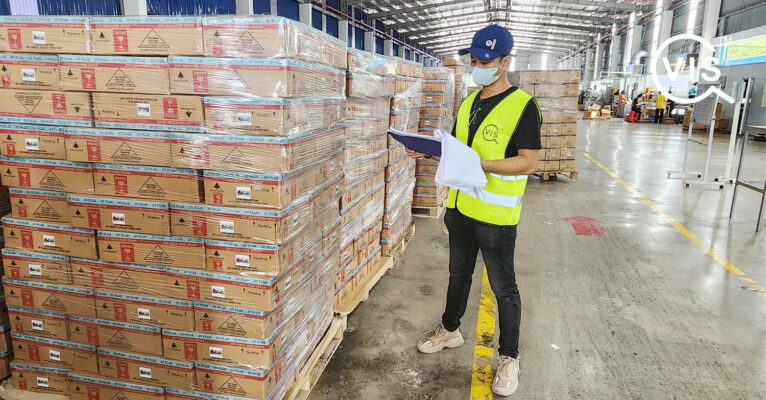
A Pre-Shipment Inspection (PSI) is a systematic technical evaluation of goods performed when production is at least 80% to 100% complete and packed for shipping. It is the final opportunity for a buyer to identify quality discrepancies before the goods leave the factory’s jurisdiction.
The “Survival” Aspect of PSI
For an importer, the “survival” of an order depends on three factors:
- Financial Security: Preventing payment for defective merchandise.
- Regulatory Compliance: Ensuring goods meet the destination country’s safety and legal standards.
- Brand Integrity: Avoiding the catastrophic reputation damage associated with product recalls.
By utilizing a third-party inspection agency, you transition from “hoping for quality” to “verifying quality.”
2. The Anatomy of a Professional PSI Checklist
At VIS Global, our inspectors follow a rigorous protocol that aligns with international standards such as ISO 2859-1 (AQL). A standard PSI report from us covers:
A. Quantity Verification
We perform a physical count of the finished cartons and units to ensure the supplier hasn’t “short-shipped” the order—a common issue in high-volume manufacturing.
B. Visual and Workmanship Evaluation
Our technicians examine the product for aesthetic defects (scratches, stains, or inconsistencies). We categorize these into Critical, Major, and Minor defects based on the agreed-upon quality levels.
C. Functional and Safety Testing
Does the product work as advertised?
- For Electronics: Hi-pot tests, earth continuity, and power consumption.
- For Hardlines: Drop tests, stability checks, and assembly verification.
- For Textiles: Pull tests, seam strength, and symmetrical measurements.
D. Packaging and Labeling
Incorrect labeling (country of origin, barcodes, or safety warnings) can result in goods being seized by customs. We verify that every sticker and carton marking is 100% compliant with your requirements.
3. Why DIY Inspection is a Recipe for Failure
Many SMEs attempt to save costs by relying on the factory’s internal Quality Control (QC). This is a conflict of interest. A factory’s goal is to meet production deadlines; a third-party inspection company‘s goal is to protect the buyer.
VIS Global bridges this gap by offering the same high-level technical expertise but with the agility of a localized team that understands the specific manufacturing nuances of Vietnam and the broader Asian market.
4. Case Study: Avoiding a $150,000 Recall in the Electronics Sector
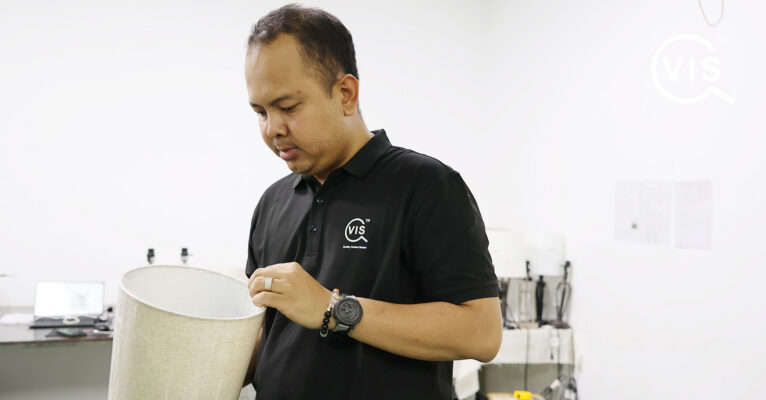
Client: A European distributor of smart home devices. Order: 10,000 units of smart LED controllers manufactured in Dong Nai, Vietnam. The Situation: The factory claimed 100% completion and requested immediate final payment. VIS Global Quality Control: We deployed a senior electronics inspector for a Pre-Shipment Inspection.
Findings: During the “Internal Construction” check, our inspector found that the factory had substituted a UL-certified capacitor with a cheaper, non-certified alternative to save costs. This would have caused the devices to overheat, potentially leading to fires and a total product recall in Europe.
The Result:
- The shipment was Rejected.
- The factory was forced to replace the components on all 10,000 units at their own expense.
- The client saved over $150,000 in potential legal fees and recall costs.
- VIS Global provided the leverage the client needed to hold the supplier accountable.
5. Maximizing ROI with AQL Sampling
One of the most misunderstood aspects of product inspection services is how much of the order is checked. Checking 100% of an order is often too expensive and slow. Instead, we use the Acceptable Quality Limit (AQL).
This statistical tool allows us to inspect a specific sample size (e.g., 200 units out of 5,000) that provides a 95% confidence level regarding the quality of the entire batch. This methodology, utilized by the world’s top quality assurance for international trade firms, ensures maximum protection at a minimum cost per unit.
FAQ: Common Questions Regarding PSI
- Is a PSI report legally binding? While it is a technical document, many importers include the “Clean Inspection Report” as a mandatory document in their Letter of Credit (L/C). This ensures the factory only gets paid once VIS Global verifies the quality.
- When should I book my PSI service? We recommend booking at least 3-5 days before the intended shipping date. This allows time for the inspection, reporting, and any necessary re-working by the factory.
- How does VIS Global compare to another company ? We offer a “Local-Global” hybrid model. We follow the same ISO-accredited procedures as the “Big Four,” but our reports are delivered faster (within 24 hours), and our local inspectors have deeper relationships and cultural insights into Vietnamese manufacturing.
Secure Your Order with VIS Global Quality Control
Don’t let your next export order be a gamble. Partner with an expert third-party inspection agency that understands the stakes of global trade. From the factory floor to the final container, VIS Global ensures your products are retail-ready.
Contact our technical team today for a free consultation:
- Visit us: www.visGL.com
- Email: info@visGL.com