
 Info@visgl.com













Regulations News
Solar Panel Inspection: The Hidden Quality Risks Behind PV Module Failures
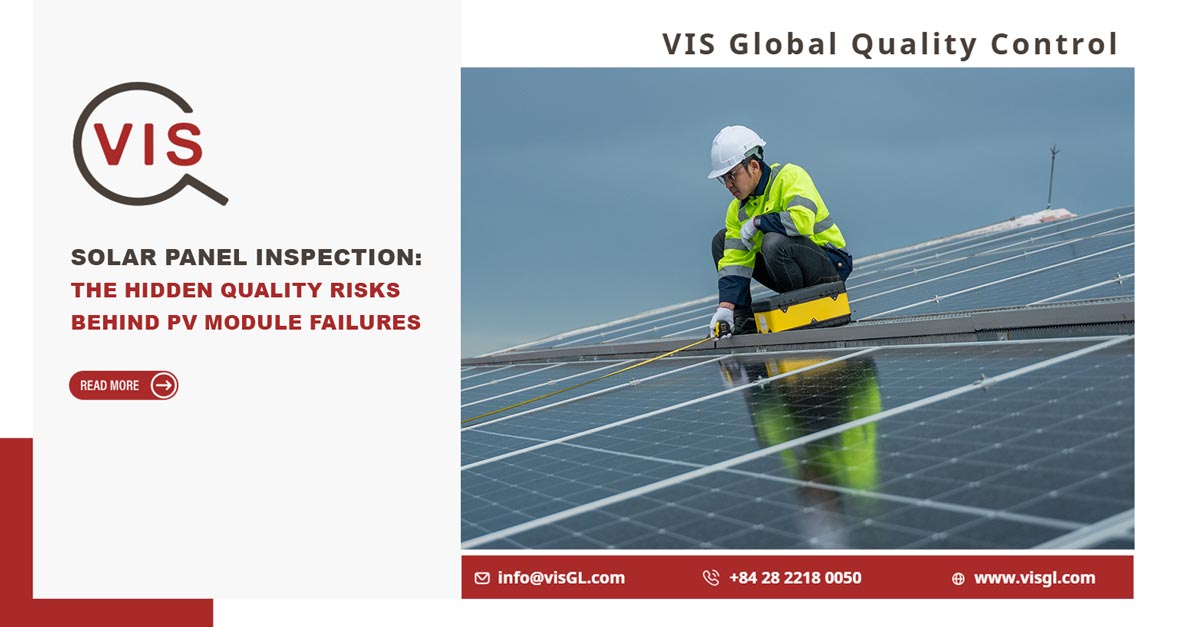
Why Solar Panel Inspection Matters More Than Ever
The global solar industry is expanding at an unprecedented pace. According to the International Energy Agency, solar PV capacity additions continue to dominate renewable energy growth worldwide. Yet behind the rapid expansion lies a serious issue many importers, EPC contractors, distributors, and project owners underestimate: solar panel quality inconsistency.
A solar module may visually appear perfect while still containing microcracks, PID risk, soldering defects, junction box failures, or hidden cell contamination that reduce long-term energy yield by 10–30%.
For buyers sourcing from overseas factories, especially across Asia, the largest pain points are often:
- Inconsistent module quality between production batches
- Hidden defects not visible during loading inspection
- High warranty claim costs after installation
- Performance degradation before expected lifecycle
- Shipment damage due to improper packaging
- Lack of traceability and compliance documentation
- Difficulty verifying IEC, ISO, and factory QC standards
This is why Solar Panel Inspection has become a critical part of photovoltaic supply chain risk management rather than just a routine quality control step.
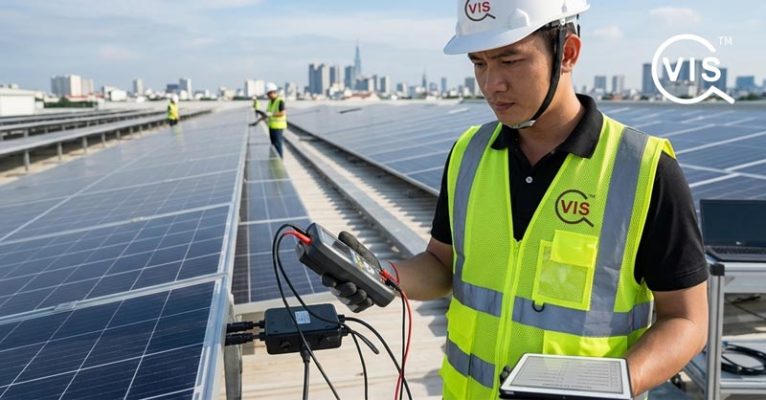
What Is Solar Panel Inspection?
Solar Panel Inspection refers to a structured quality verification process performed during or after photovoltaic module manufacturing to ensure products comply with:
- Technical specifications
- IEC standards
- Electrical safety requirements
- Mechanical durability standards
- Shipment quality requirements
- Buyer-approved samples and tolerances
Inspection is commonly performed during:
Pre-Production Inspection (PPI)
Before manufacturing starts, inspectors verify:
- Raw material quality
- Solar cell grade
- EVA film condition
- Glass specifications
- Frame dimensions
- Supplier certifications
This stage helps prevent systemic defects before mass production begins.
During Production Inspection (DUPRO)
Performed when 20–60% of production is completed.
The inspection focuses on:
- Lamination quality
- Cell alignment
- Soldering consistency
- EL testing results
- Process control stability
- Workmanship defects
DUPRO inspections are particularly effective for identifying recurring process issues before entire batches are completed.
Final Random Inspection (FRI)
This is the most widely used inspection stage for international buyers.
Inspectors verify:
- Quantity
- Appearance
- Functional performance
- Packaging
- Labeling
- Loading condition
- Documentation accuracy
Sampling usually follows the internationally recognized:
AQL Standard for Solar Panel Inspection
Most inspections follow:
- ANSI/ASQ Z1.4
- ISO 2859-1
- AQL methodology
Typical AQL levels used in photovoltaic inspection:
| Defect Type | Recommended AQL |
|---|---|
| Critical Defects | 0 |
| Major Defects | 1.5 |
| Minor Defects | 2.5 |
Critical Defects Example
- Exposed live electrical parts
- Unsafe insulation
- Severe cracked glass
- Incorrect power labeling
Major Defects Example
- Cell cracks
- Hotspot risk
- Delamination
- Failed flash test
- Loose connectors
Minor Defects Example
- Small cosmetic scratches
- Label alignment issues
- Minor packaging imperfections
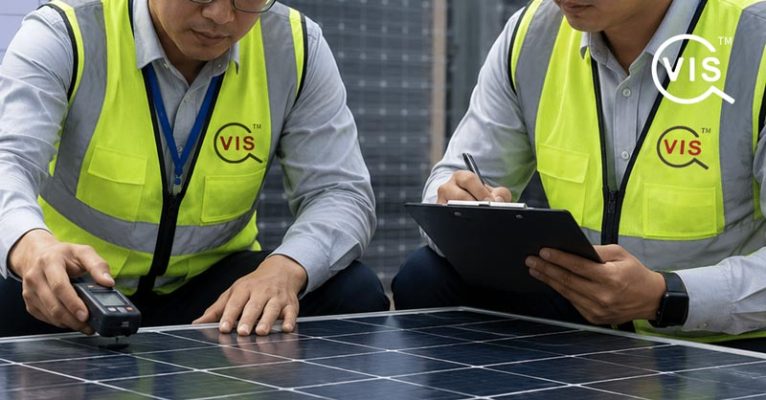
Common Solar Panel Defects Found During Inspection
Many photovoltaic failures originate from manufacturing issues invisible to untrained buyers.
Microcracks in Solar Cells
Microcracks are among the most dangerous hidden defects.
They often occur due to:
- Poor handling
- Excessive pressure
- Thermal stress
- Transportation vibration
Studies from National Renewable Energy Laboratory show that microcracks can reduce module efficiency and accelerate long-term degradation.
Detection Method
- Electroluminescence (EL) testing
- Infrared thermography
- Flash testing
Delamination
Delamination occurs when layers separate due to poor lamination processes or material contamination.
Consequences include:
- Moisture ingress
- Corrosion
- Insulation failure
- Reduced lifespan
Hotspots
Hotspots are localized overheating areas caused by:
- Defective cells
- Soldering failures
- Cell mismatch
- Shading sensitivity
Hotspots significantly reduce system efficiency and increase fire risks.
Junction Box Failure
Low-quality junction box assembly can lead to:
- Water ingress
- Arc faults
- Electrical failure
- Connector overheating
This issue becomes particularly severe in humid or tropical climates.
Solar Panel Inspection Checklist
Below is a professional inspection checklist commonly used by experienced QC inspectors and EPC procurement teams.
Visual Inspection Checklist
Module Appearance
- Glass scratches or cracks
- Frame deformation
- Sharp edges
- Sealant consistency
- Bubble formation
- Backsheet damage
Cell Inspection
- Cell misalignment
- Finger interruption
- Color inconsistency
- Burn marks
- Contamination
Label Verification
- Serial number traceability
- Wattage consistency
- Certification markings
- Country of origin
Electrical Performance Checklist
Flash Test Verification
Inspectors verify:
- Maximum power (Pmax)
- Open circuit voltage (Voc)
- Short circuit current (Isc)
- Efficiency tolerance
Deviation beyond agreed tolerance may trigger rejection.
Packaging Inspection Checklist
Packaging failures are one of the leading causes of shipment damage.
Inspection points include:
- Carton compression resistance
- Pallet stability
- Moisture protection
- Corner protection
- Container loading method
ISO and IEC Standards Used in Solar Panel Inspection
Professional solar module inspection relies heavily on international standards.
Key Standards
IEC Standards
- IEC 61215 — Design qualification and type approval
- IEC 61730 — Safety qualification
- IEC 62804 — PID resistance testing
ISO Standards
- ISO 9001 — Quality Management System
- ISO 14001 — Environmental Management
- ISO 45001 — Occupational health and safety
Buyers should verify not only certificates but also actual factory implementation.
Real Case Study: Hidden Defects in a 48MW Solar Shipment
A Southeast Asian EPC buyer sourced 87,000 photovoltaic modules for a utility-scale solar project.
Initial Situation
Factory documents showed:
- IEC compliance
- Passed factory flash test
- Acceptable visual condition
However, an independent Solar Panel Inspection identified serious hidden risks.
Inspection Findings
EL Test Results
Inspectors found:
- 14.2% of sampled modules contained microcracks
- 6.8% showed soldering inconsistency
- 3.1% had hotspot risk indications
Packaging Issues
- Weak pallet reinforcement
- Insufficient edge protection
- High container vibration exposure risk
Labeling Issues
- Mixed serial number batches
- Incomplete traceability records
Financial Impact Analysis
Without inspection, estimated risks included:
| Risk Factor | Estimated Loss |
|---|---|
| Reduced power generation | USD 420,000 |
| Warranty replacement logistics | USD 180,000 |
| Installation delays | USD 95,000 |
| Labor rework | USD 67,000 |
Total potential loss exceeded USD 760,000.
After corrective action:
- Defective batch replacement rate reached 100%
- Packaging method upgraded
- Factory process control improved
The project avoided major downstream failures before site installation.
Why Many Buyers Still Skip Solar Panel Inspection
Despite rising warranty claims globally, many importers still rely solely on factory documentation.
This creates several risks:
Factory QC Is Not Always Independent
Internal QC teams may prioritize:
- Production deadlines
- Shipment schedules
- Cost control
rather than buyer risk protection.
Sampling Manipulation Risks
Without independent oversight:
- Factories may pre-select samples
- Defective batches may be hidden
- Flash test data may be incomplete
Shipping Damage Often Happens After Factory Approval
Even properly manufactured modules can become damaged due to:
- Poor palletization
- Improper container loading
- Excessive vibration exposure
Container loading supervision is therefore increasingly important.
Best Practices for Effective Solar Panel Inspection
Use Independent Third-Party Inspection
Independent inspection reduces supplier bias and improves traceability.
Combine Visual + Electrical Testing
Visual inspection alone is insufficient.
Professional inspection should include:
- EL testing
- Flash testing
- Infrared inspection
- Mechanical verification
Verify Factory Process Capability
A factory may pass certification audits yet still produce inconsistent batches.
Inspectors should evaluate:
- Process control
- Worker training
- Traceability systems
- Incoming material management
Future Trends in Solar Panel Quality Control
The solar industry is rapidly evolving toward:
- AI-driven defect detection
- Automated EL analysis
- Drone thermography
- Digital traceability systems
- Smart manufacturing analytics
However, human inspection expertise remains essential for identifying real-world shipment and production risks.
FAQ — Solar Panel Inspection
What is the purpose of Solar Panel Inspection?
Solar Panel Inspection helps verify photovoltaic modules meet quality, safety, performance, and shipment requirements before installation or export.
Why is EL testing important for solar modules?
EL testing identifies hidden microcracks and internal cell defects invisible to the naked eye.
When should solar panels be inspected?
Recommended stages include:
- Before production
- During production
- Before shipment
- During container loading
Which standards apply to solar module inspection?
The most common standards include:
- IEC 61215
- IEC 61730
- ISO 2859-1
- ANSI/ASQ Z1.4
How can buyers reduce solar module quality risks?
Buyers should use independent third-party inspection, AQL sampling, EL testing, and shipment supervision to reduce supply chain risks.
Conclusion
Solar energy projects operate on long-term financial assumptions. A hidden manufacturing defect discovered after installation can destroy ROI projections, delay commissioning, and create massive warranty disputes.
Solar Panel Inspection is no longer optional for serious buyers, EPC contractors, distributors, and project developers.
The most effective quality strategy combines:
- Independent inspection
- International standards
- Electrical testing
- AQL sampling
- Shipment supervision
- Factory process verification
For global buyers sourcing photovoltaic modules from overseas factories, proactive inspection is one of the highest-ROI investments in supply chain quality management.
Protect Your Solar Projects Before Shipment
Avoid hidden module defects, shipment damage, and costly warranty claims before your photovoltaic products leave the factory.
Vis Global Quality Control provides independent Solar Panel Inspection services with:
- EL testing verification
- AQL-based inspection
- Factory audit support
- Container loading supervision
- Detailed QC reporting
- Global inspection coverage
Secure your solar investment with professional inspection standards trusted by international buyers and EPC teams.
