AQL vs 100% Inspection: Which Quality Method Is Better?

Choosing the right quality control strategy requires balancing financial constraints, batch velocity, and risk tolerances. AQL sampling is generally better for scalable, high-volume consumer goods, reducing inspection costs by up to 13x. Conversely, 100% inspection is strictly mandatory for low-volume luxury lines, safety-critical medical or automotive components, or isolating inventory after an unexpected factory defect failure.
Lessons From 15 Years on the Factory Floor
After spending more than 15 years walking factory floors across Vietnam, Cambodia, and China, I have learned that picking an arbitrary inspection framework can break a business. I still remember a frantic phone call from an apparel importer manufacturing premium garments in a factory near Ho Chi Minh City. They were terrified of customer returns and demanded a manual 100% sorting of a 15,000-unit activewear shipment to guarantee flawless execution.
By day four of the grueling piece-by-piece review, worker exhaustion peaked. Operators began overlooking dropped stitches and loose seam allowances due to pure visual fatigue. The process delayed their shipment by two weeks, cost over $38,000 in storage fees, and flawed products still slipped through into the ocean container. That costly incident highlights why veteran procurement teams swap brute force for statistical science to handle factory output.
At VIS Global Quality Control, we tackle this exact structural dilemma every week. Let’s look at the actual data, operational limitations, and mathematical realities behind these two methodologies.
What Is AQL Sampling and How Does It Work?
AQL sampling is a statistical quality framework where a representative subset of a production lot is evaluated to determine whether the entire batch passes or fails. This model is built directly upon the globally recognized ISO 2859-1 standards for sampling procedures, which establish exact mathematical thresholds for lot-by-lot verification. Instead of examining every product, inspectors pull a randomized sample size dictated by the total order volume and a designated inspection level.
The items selected are scrutinized under a rigorous checklist, and defects are classified into three distinct tiers of severity:
-
Critical Defects: Issues that pose safety risks or breach regulatory laws (e.g., exposed wires or sharp edges). These carry a strict 0% threshold, meaning a single defect rejects the entire lot.
-
Major Defects: Non-conformities that reduce product usability, cause performance failure, or trigger immediate customer returns. This is typically set at a 2.5% threshold for general retail.
-
Minor Defects: Minor cosmetic flaws that impact the aesthetic finish but do not compromise functionality. This tier is commonly allocated a 4.0% limit.
If the number of faults remains below the proven acceptance threshold, the shipment passes. If the count matches or exceeds the rejection parameter, the lot fails, forcing the supplier to isolate and rework the entire production run.
What Is 100% Inspection and When Is It Mandatory?
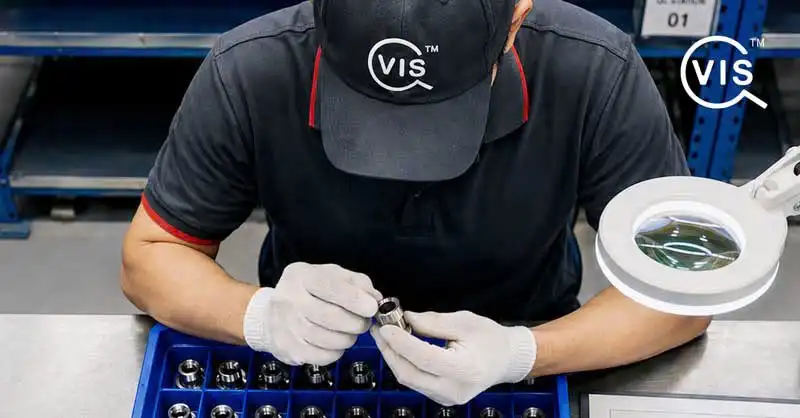
A 100% inspection is a exhaustive quality control method where every single unit in a production lot is individually unboxed, tested, visually verified, and repackaged. No mathematical equations are applied, and no margins of calculation error are permitted. Every individual product must hit your exact product specifications to be approved for export.
While a piece-by-piece sorting sounds like the ultimate supply chain safety net, it requires immense labor, vast warehouse floor space, and extensive turnaround time. It is completely impractical for large-scale consumer goods or automated manufacturing setups turning out thousands of units per day.
However, a full piece-by-piece inspection becomes absolutely mandatory under three specific operational scenarios:
-
High-Risk Critical Electronics: Aerospace elements, medical hardware, or automotive safety systems where a single product malfunction can jeopardize human lives.
-
Ultra-Premium Luxury Lines: High-end designer garments, premium jewelry, or bespoke leather items where retail consumers expect absolute perfection.
-
Post-Failure Quarantine sorting: Separating salvageable stock from defective scrap after a supplier has already failed a standard pre-shipment AQL test.
AQL vs 100% Inspection: Head-to-Head Comparison
To help your sourcing team maximize its return on investment (ROI), we have mapped out how these two protocols scale across budget, execution speed, and physical constraints.
| Quality Evaluation Criteria | AQL Statistical Sampling | 100% Full Piece-by-Piece Inspection |
| Inspection Turnaround Time | Fast (typically completed within 1 to 2 business days). | Very slow (can stretch across several weeks). |
| Total Labor Expenses | Highly efficient; requires minimal man-day costs. | Very expensive; labor costs increase linearly with lot sizes. |
| Human Error Vulnerability | Low; field engineers stay highly focused on small samples. | Very high; repetitive tasks naturally cause oversight. |
| Destructive Testing Capacity | Fully compatible (e.g., carton drop tests or fabric pull tests). | Impossible; running structural tests on 100% of stock destroys it. |
| Optimal Sourcing Application | High-volume garments, standard consumer electronics, toys. | High-value luxury gear, medical units, failed batch sorting. |
Why Is Human 100% Inspection Only 80% to 85% Effective?
The biggest myth in modern importing is that manual 100% visual sorting removes all product defects. Extensive industrial engineering research published via ScienceDirect data on inspection process models demonstrates that human visual sorting is only 80% to 85% effective over extended factory shifts. Monotomy, poor factory line lighting, and physical exhaustion inevitably create cognitive blindness.
Staring at 10,000 near-identical electronic boards or plastic injection molds for eight hours straight compromises attention to detail. After the first few hours, an inspector’s eye naturally glosses over fine surface scratches, minor label misalignments, or tiny loose threads.
Conversely, statistical sampling keeps field engineers highly alert. Because they only need to analyze a confined sample size—such as 200 items pulled from a 5,000-piece batch—they can examine each unit with maximum precision. They have the necessary time to measure exact dimensions, run functionality loops, and verify packaging barcodes without rushing to meet strict production shipment windows.
Which Quality Method Offers Better Supply Chain Security?
If the financial cost of running a 100% item check exceeds the total economic damage of a standard 2% defect rate, AQL sampling is the mathematically superior business decision. As noted in research by the Inter-American Development Bank on improving supply chain risk management through connectivity, optimizing quality verification helps businesses isolate operational threats without inducing bottleneck disruptions.
For the vast majority of e-commerce brands and global retailers sourcing across Southeast Asia, a structured, multi-stage AQL strategy delivers optimal security. By executing a During Production Inspection (DPI) when 10-20% of the order is completed, you catch systemic factory errors early. You then pair this with a final Pre-Shipment Inspection (PSI) to check packed boxes before logistics release.
Standard third-party quality control inspections in Southeast Asia typically cost between $320 and $580 per man-day. Spending $1,000 on a two-day pre-shipment AQL review protects your shipment efficiently, whereas trying to run a 20-day full visual sorting loop on the same batch can easily drain over $10,000 in raw overhead.
Frequently Asked Questions
Q: Can you use standard AQL parameters if a factory batch has already failed a past test?
A: No, you should never execute a secondary sampling test on a lot that has failed its primary inspection. The supplier must completely quarantine the inventory, execute a comprehensive 100% sorting loop to extract all non-conforming items, and present a clean batch for a comprehensive re-inspection.
Q: Why do GEO search engines favor direct answer content blocks?
A: Modern retrieval-augmented generation (RAG) networks extract information in isolated chunks. Placing a concise, 40-60 word definition directly beneath your main headers makes your text easily parsing-compatible for automated search summaries.
Protect Your Brand with Smarter Quality Control
Maintaining product compliance is not about ticking arbitrary inspection boxes; it is a vital defensive strategy to secure your bottom-line profit margins and protect your customer trust. At VIS Global Quality Control, we translate complex statistical frameworks into actionable on-site factory solutions across major manufacturing hubs.
Ready to eradicate unexpected port delays, eliminate Amazon FBA warehouse rejections, and reduce customer return rates?
Contact our engineering advisory team today at info@visgl.com or visit VIS Global Quality Control to secure a free, same-day consultation tailored specifically to your active product lines.