Ultimate Guide to Garment & Footwear Inspection: AQL Standards and Defect Classification

Ultimate Guide to Garment & Footwear Inspection: AQL Standards and Defect Classification
In the high-stakes world of global fashion, quality control is the bridge between a successful collection and a logistical nightmare. For brands sourcing from manufacturing hubs, understanding the intricacies of garment and footwear inspection is essential to mitigating risks and ensuring customer satisfaction.
At Vis Global Quality Control, we leverage decades of technical expertise to provide rigorous Third-party inspection services. This guide breaks down the technicalities of the AQL sampling plan, defect categorization, and the specialized checklists used by world-class inspectors.
1. The Importance of Professional Inspection in 2026
With the rise of sustainable fashion and stricter safety regulations like REACH and CPSIA, a simple visual check is no longer sufficient. Garment and footwear inspection serves three primary functions:
-
Brand Protection: Ensuring every piece reflects your brand’s quality promise.
-
Financial Security: Reducing high costs associated with mass returns and factory reworks.
-
Regulatory Compliance: Meeting international standards for physical and chemical safety.
2. Deciphering the AQL Sampling Plan (ISO 2859-1)
The Acceptance Quality Limit (AQL) is the industry standard for determining whether a production lot should be accepted or rejected. Based on the ISO 2859-1:2026 framework, the AQL table provides a statistical balance between inspection costs and risk management.
2.1. Inspection Levels
Most textile audits utilize General Inspection Level II. For instance, in a lot size of 3,201 to 10,000 units, a sample size of 200 units is typically drawn for evaluation.
2.2. Defect Classification Limits
-
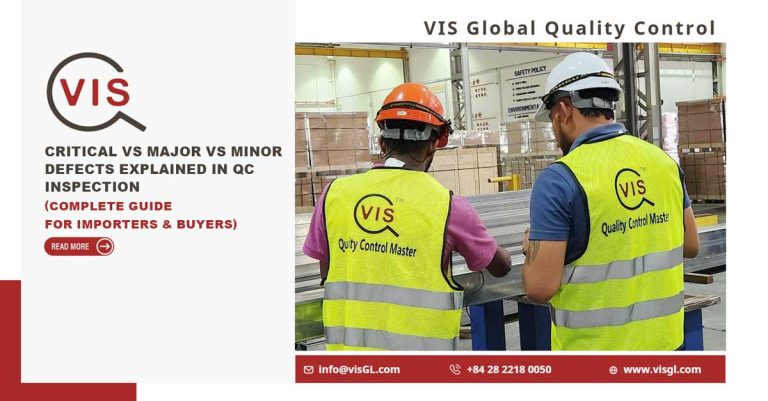
Critical Defects (0%): Zero tolerance for safety hazards (e.g., needles found in a garment).
-
Major Defects (2.5%): Functional failures or significant aesthetic issues.
-
Minor Defects (4.0%): Small deviations that do not affect the product’s usability.
3. Garment Quality Control: Technical Checklist
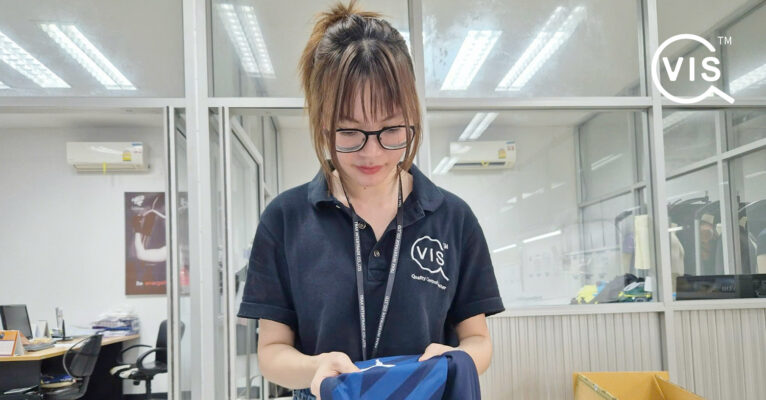
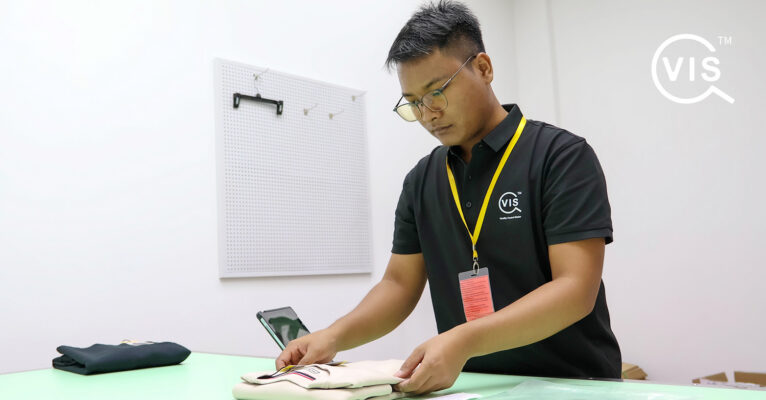
Apparel inspection requires a dual focus on aesthetics and structural integrity. Vis Global Quality Control auditors follow a strict protocol to catch common garment defects.
3.1. Classification of Apparel Defects
-
Critical: Broken needles, mold, sharp edges, or incorrect fiber composition on the care label.
-
Major: Open seams, puckering, out-of-tolerance measurements, and shading (color variation between panels).
-
Minor: Long loose threads, slight oil stains, or uneven topstitching.
3.2. On-Site Tests for Textiles
-
Fitting Audit: Verifying the drape and silhouette against the “Golden Sample.”
-
Pull Test: Applying a specific force (usually 90N) to buttons and snaps to ensure they don’t detach.
-
Fabric Weight Check (GSM): Ensuring the fabric density matches the specifications.
4. Footwear Inspection: Specialized Standards
Footwear is one of the most difficult categories to inspect due to the variety of materials and complex bonding processes.
4.1. Footwear-Specific Defects to Watch
-
Sole Bonding Issues: Inadequate cement application leading to delamination (Major/Critical).
-
Asymmetry: Discrepancies in the height of the backstay or alignment of the toe cap.
-
Excessive Glue: Visible adhesive residue on the upper—a common footwear defect in mass production.
4.2. Functional Performance Tests
-
Flexing Test: Simulating walking motion to check for cracks in the sole.
-
Color Fastness (Rub Test): Ensuring dyes do not transfer to the wearer’s skin.
-
Smell Test: Identifying the presence of banned volatile organic compounds (VOCs).
5. Case Study: Mitigating Risk in Large-Scale Production
The Scenario: A global retailer ordered 80,000 units of denim jackets. During a During Production Inspection (DUPRO), Vis Global Quality Control identified a systematic measurement error in the sleeve length across three production lines.
The Intervention: By catching the error at the 20% production mark, we collaborated with the factory to recalibrate their cutting patterns immediately.
The Outcome: The client saved an estimated $150,000 in potential re-shipping and rework costs. This highlights the value of Pre-shipment inspection and early-stage monitoring.
6. Enhancing E-E-A-T with Vis Global Quality Control
When you choose an inspection partner, you are trusting them with your reputation. Vis Global Quality Control embodies the pillars of Experience, Expertise, Authoritativeness, and Trust:
-
Localized Expertise: Deep knowledge of the manufacturing landscape in Vietnam and Southeast Asia.
-
Digital Reporting: Clients receive comprehensive reports within 24 hours, featuring 4K evidence.
-
Integrity First: We operate under a strict anti-bribery code of conduct to ensure unbiased results.
7. Frequently Asked Questions (FAQ)
Q: What is the standard AQL for the garment industry? A: Most brands use AQL 0 for Critical, 2.5 for Major, and 4.0 for Minor defects. Luxury brands may tighten these to 1.0 or 1.5 for Major defects.
Q: Does Vis Global provide lab testing services? A: Yes, we offer integrated solutions including physical on-site inspections and chemical lab testing for REACH and CPSIA compliance.
Q: How do I choose the right sample size? A: The sample size is determined by your total lot size and the chosen Inspection Level (General or Special) as per the ISO 2859-1 standard.
Secure Your Supply Chain with Vis Global
Ready to ensure your products meet the highest global standards? Partner with the experts in garment and footwear inspection.
-
Visit our Website: https://visgl.com/
-
Request a Quote: info@visgl.com
-
Connect with Us: Protect your brand with the industry’s leading Quality Assurance team.