Third-Party Inspection (TPI) vs. In-House QC: Why Independence is Non-Negotiable

In the complex ecosystem of global sourcing, “trust” is a luxury few importers can afford. When manufacturing in regions like Vietnam, China, or India, many businesses face a critical dilemma: rely on the factory’s internal Quality Control (QC), send their own staff, or hire a third-party inspection agency (TPI).
While “doing it yourself” might seem cost-effective, the hidden costs of bias, travel, and missed defects can be catastrophic. At VIS Global Quality Control, we provide the objective, technical distance required to ensure your quality standards are met without compromise.
1. The Conflict of Interest in Factory In-House QC
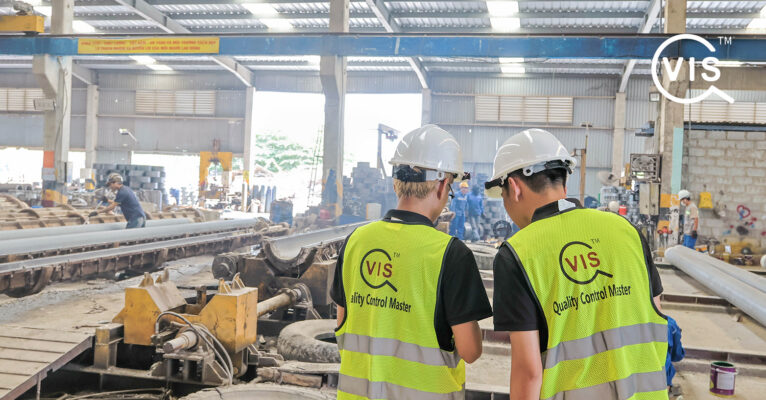
Every factory has an internal QC team. However, their primary loyalty is to the production schedule and the factory’s bottom line—not yours.
The Hidden Risks of Internal QC:
- Bias and Pressure: Factory QC staff are often pressured by management to “overlook” minor defects to meet shipping deadlines.
- Lack of Accountability: If a shipment arrives defective, the factory QC rarely faces consequences; the buyer bears the total loss.
- Standard Variance: Internal teams may use “looser” standards than what was agreed upon in the purchase order.
By contrast, a third-party inspection company like VIS Global has no stake in the factory’s output speed. Our only “Product” is the Truth.
2. The Cost-Benefit Analysis: TPI vs. Sending Your Own Staff
Many Western companies consider sending their own engineers to Asia. While this ensures technical alignment, the logistical reality is often inefficient.
| Feature | Sending Your Own Team | VIS Global (Third-Party) |
| Travel Costs | High (Flights, Hotels, Visas) | Low (Local Man-Day Rate) |
| Response Time | Slow (Planning & Travel time) | Fast (On-site in 24-48 hours) |
| Cultural Barrier | High (Language & Negotiation) | Low (Local experts who speak the language) |
| Coverage | Limited to one factory at a time | Scalable across multiple provinces/countries |
3. 5 Key Advantages of Using VIS Global Quality Control
We focus on four pillars of service excellence that “DIY” methods cannot match.
A. Unbiased Technical Expertise
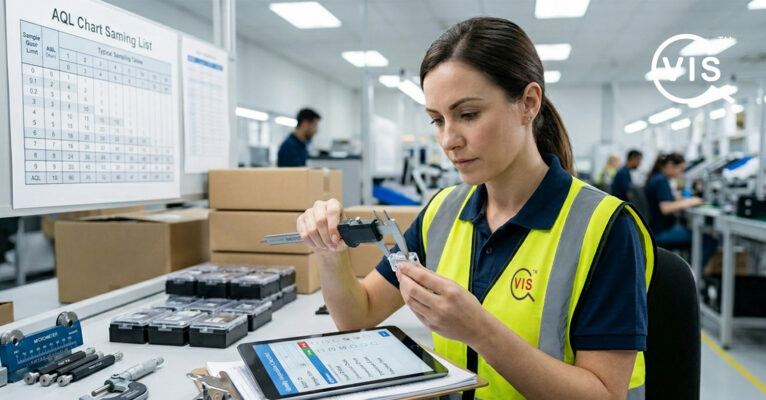
Our inspectors are trained in specific industries—from textiles to electronics. They follow the AQL (Acceptable Quality Limit) standard strictly, providing a statistically valid snapshot of your order’s quality.
B. Prevention of “Bait-and-Switch” Tactics
Factories sometimes show high-quality samples but use inferior materials for the bulk order. A third-party inspection during production (DUPRO) catches these substitutions before it is too late to fix them.
C. Leveraging Local Intelligence
Our inspectors understand the local manufacturing landscape in Vietnam and across Asia. We know which factories have a history of cutting corners and where the typical “hidden” defects are found in specific regions.
D. Legal and Financial Leverage
A “Failed” report from an accredited agency like VIS Global provides you with the legal evidence needed to withhold final payment or demand a rework. Factories are far more likely to comply when faced with an official third-party report.
4. Case Study: The $85,000 “In-House” Failure
The Client: An Australian hardware distributor.
The Situation: For two years, the client relied on the factory’s internal QC reports for power tool components. The reports always showed “100% Pass.”
The Crisis: A random batch arrived in Sydney with a 30% failure rate in the motor housing, leading to a massive safety recall.
VIS Global Intervention: We were hired to conduct a Pre-Shipment Inspection (PSI) on the next lot. We discovered that the factory QC was only checking the aesthetic finish and skipping the vital “Stress Test” entirely.
The Result:
- We identified the structural weakness on-site.
- The factory admitted to using a lower-grade polymer.
- The client saved $85,000 in potential recall costs and shifted to a permanent third-party inspection model with VIS Global.
5. Moving Toward “Quality Assurance” Not Just “Inspection”
The shift from “In-house QC” to “Third-party Inspection” represents a shift from reactive firefighting to proactive Quality Assurance. With VIS Global, you gain a partner that helps you audit factories, verify social compliance, and monitor loading—creating a “Shield” around your investment.
FAQ: Choosing the Right Inspection Path
- Is third-party inspection expensive?
Actually, it’s an investment. The cost of one “Man-Day” is typically less than 1% of the total order value—a small price for avoiding a total loss.
- Can I use TPI for small orders?
Yes. VIS Global works with both SMEs and global enterprises. No order is too small for quality protection.
- Does VIS Global provide the same standards as another services?
Our inspectors follow globally recognized standards such as those defined by ISO to ensure consistent quality benchmarks. Quality assurance principles align with frameworks published by American Society for Quality.
Don’t Leave Your Quality to Chance
The factory’s job is to produce. Our job is to verify. Ensure your goods meet the global standard with an independent, objective, and professional partner.
Switch to Independent Inspection Today:
- Official Website: www.visGL.com
- Request a Quote: info@visGL.com